
6 March 26
The Past Continuous
Several friends whose grasp of English grammar is better than mine have been unable to answer a question I have: What is the name of the construction in English, where the word “would” is used as a continuous past tense instead of as a conditional? Here’s an example I made up: “As a child, I would often go and play in a sandbox.”
Trying to figure this out, I remembered one of the most famous opening lines in all of literature, the first sentence in Marcel Proust’s A la Recherche du Temps Perdu: “Longtemps, je me suis couché de bonne heure.” I just came across an interesting discussion between Richard Howard and George Plimpton about different published and unpublished translations of this sentence, but none of them uses the “would” construction.
Which is what I would use, here: “For a long time, I would go to bed early.” It gives the sense of a repeated action happening over time, in the imperfect, though Proust doesn’t use the imperfect here, which, as Howard points out, is jarring: almost nowhere else in the seven volumes is the passé composé used in the narrative. The standard English translation for decades, Scott Moncrieff, reads “I used to go to bed early,” which is a different imperfect continuous…
Such questions keep me up at night, which is better than being kept up by stupid and illegal foreign wars.
5 March 26
Delusions From Middle-Earth
Today I submitted a public comment to the Federal Communications Commission on the proposal from SpaceX to launch up to a million satellites for orbital data centers, which I blogged about last Friday. I am now working on the public comment for the Reflect Orbital proposal to put giant mirrors into space to light up the night particularly for use by solar farms. I retrieved the Reflect Orbital proposal documents from the FCC portal and was disenchanted to find that the name of their initial test satellite with an 18-meter mirror is EARENDIL-1.
This is a name that comes from Tolkien: Eärendil was a half-elf in The Silmarillion who bore on his brow a jewel — a Silmaril — that shone like a bright star. This leads to the question: why are so many tech bros obsessed with Tolkien?
A lot of people have commented on this trait lately. A writer named Samuel Arbesman compiled a list of all the tech companies he could find that have names from Tolkien (there are 22). In an essay entitled Mythic Capital, Lee Konstantinou discusses how Tolkien teaches a lot about capital and politics and the technoutopian vision of breaking free of all limits. In the New York Times Michiko Kakutani writes about how the traditionalism running through Tolkien appeals to the tech bros and that they are drawn to the themes of kingly and magical power rather than the gentle settled life of the hobbits.
It is interesting that when Tolkien first got popular in the late 1960s and early 1970s it was pulling in people mostly from the hippie counterculture. Times have changed.
But Pratchett doesn’t seem to appeal to the tech bros — I don’t see too many companies celebrating the cabbages of the Sto Plains for some reason.
4 March 26
German Modal Particles
I tortured my Advanced German Conversation class last night with an hour of modal particles, which are a peculiarity common to only a few languages (Russian, Japanese and Hungarian also use them) and which help convey attitude or intention. They are only used in spoken language, their omission doesn’t change the sense of a sentence, and they are very difficult to translate, being context-dependent. English tends to convey these intentions either with intonations or question tags. The particles also have a separate meaning outside their modal sense, as in “ja”:
The German particle ja is used to indicate that a sentence contains information that is obvious or already known to both the speaker and the hearer. The sentence Der neue Teppich ist rot means “The new carpet is red”. Der neue Teppich ist ja rot may thus mean “As we are both aware, the new carpet is red”, which would typically be followed by some conclusion from this fact. However, if the speaker says the same thing upon first seeing the new carpet, the meaning is “I’m seeing that the carpet is obviously red”, which would typically express surprise. In speech the latter meaning can be inferred from a strong emphasis on rot and higher-pitched voice. (Wikipedia article)
I have a friend who did her master’s thesis in Germany on the avoidance by foreigners of modal particles entirely. There’s a good reason to avoid them: without a full understanding of their idiomatic use, you can get them quite wrong!
2 March 26
Listening to Language
I’ve been coordinating the Advanced German Conversation group for International House Davis since the death of our beloved instructor Paul a couple of years ago. This takes place every week on Zoom, though we also meet in person once per month, at least those of us who are local.
Last week I showed this Easy German video. It’s a podcast with an American guest (from Mississippi) whose German accent is so good that she is often mistaken for a German. She has studied German for a long time and now lives in Germany, which obviously helps, but she had to focus hard on improving what she assumed was an adequate accent and her efforts have definitely been worth it.
She did have some good tips about how to improve your accent in a foreign language. (It’s not necessarily fair, but native speakers will think your language skills are much higher than they actually are if you speak with a good accent rather than a bad one, even when your grammar is faultless.) Apart from learning what your tongue ought to be doing in your mouth and practicing sounds in front of a mirror, she recommended listening to a LOT of content in the target language. (I think this is a good practice for lots of other reasons, especially for the purpose of normalizing constructions that are awkward in our own language; German verb placement and cases with specific prepositions are two obvious examples.)
I’ve been trying to watch videos on subjects that interest me like spinning and birds following this advice. Today the algorithm served up an interview with a woman in her 90s on her experiences living (and moving around in) Germany during WWII. War inflicts trauma on everyone who lives through it with the possible exception of those who cause it…
18 February 26
In Praise of the Encyclopedia
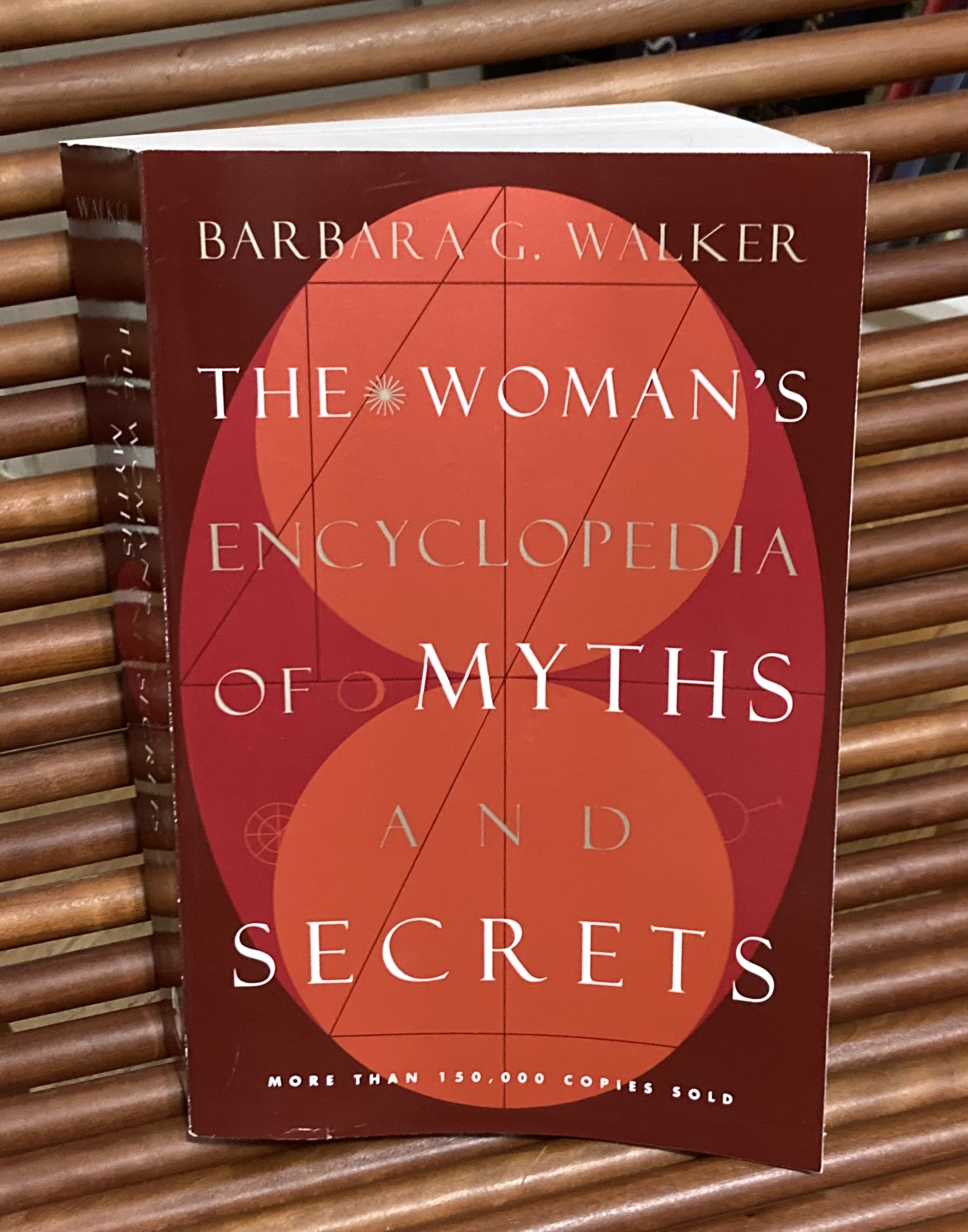 My mother was a great believer in the Encyclopedia Britannica, that multi-tome set that was moved from California to Spain and then back to California again when my parents moved to Bodega Bay in 1989. By then it was of course very out of date: scientific advances alone in the intervening 25 years made much of it basically useless. But she hauled the set with her from California to Maine when she moved there five years after my father died, and it remained in her apartment until her death last September. There was no way anyone would take it (we did try) and my only hope is that it got recycled. I do make a small monthly donation to Wikipedia, which I use almost daily and find to be a great consolation in this era of monetized information transfer.
Encyclopedias — print encyclopedias — are wonderful because they are arbitrarily arranged alphabetically, which means you can find stuff you were interested in looking up next to something you never knew you needed to know, but which is fascinating. I picked up Barbara Walker’s Women’s Encyclopedia of Myths and Secrets last week and am fascinated by the entries, but more so by the juxtapositions:
Hades, then Hag (originally Holy Woman, cognate of Egyptian heq), then Hair (a four-page entry that includes Isis, Berenice, the Compendium Maleficarum, St. Paul, Homer, Tantric sadhakas, and the old Maundy Thursday command that men shave their heads and beards in Britain so that the day came to be described as “Shear Thursday”).
If we kept books in the bathroom this would be an obvious one, but we don’t, which will probably preserve it for longer from the humidity we’re now getting in the form of a very rainy week.
15 February 26
Enric the Adventurer
Thanks to the vicissitudes of the YouTube algorithm, I have discovered the channel Enric Adventures which has the possibility of entertaining me with Catalan language content for years into the future. This is the channel of a 37-year-old civil engineer named Enric Luzán Pi who as of 30 November 2025 started the grand adventure of walking around the world (La Volta al Món a Peu), beginning in Barcelona and walking west to east. His long distance walks started in 2022 with a circumambulation of Andorra, and continued with traversing the Pyrenees, traversing the Swiss Alps via the Via Alpina Green, and crossing the Caucasus range in Georgia. He is trying to vlog his adventure daily. The channel provides subtitles in Catalan which is good for my language learning input.
Enric is presently on day 77 of his adventure and is now in the middle of Croatia. I only started watching him five days ago beginning at his Day 1 departure point at the Plaça Catalunya in Barcelona, so I have catching up to do. His daily videos are about 15 minutes each so if I watch two a day I should converge on following in real time in a month-and-a-half or so. These are a lot of fun to watch because one gets to see the landscape at a slow pace, and I like following his route with OpenStreetMap displayed in a separate window.
Enric has a video on his potential route around the world. Traversing Europe seems easy; going across Asia definitely is not, given geopolitical instability.
31 January 26
Hungering After Nobels
In the 1980s I worked as the secretary of the Centre of Latin American Studies at the University of Cambridge. Though the Centre itself never had more than four students at a time for its M.Phil programme while I was there, it was a lively focus for leftist politics (though my boss, David Brading, a historian of Mexico and devout Catholic, never gave much credence to any of it). The Sandinistas had finally overthrown Somoza in Nicaragua, and it was the early days of the revolution, before the levels of corruption and power grabs had tainted it. I was immersed in socialism and joined my academic and administrative colleagues in marches against Thatcher during the Miners Strike. It was when I first became interested in Liberation Theology.
The Centre had an endowed Chair funded by Venezuelan oil money, the Simón Bolívar professorship, which hosted Latin American men of letters (they were all men up until 2008). While I was there, the professor was Carlos Fuentes, the Mexican novelist.
Fuentes was born in Panama to Mexican diplomats and lived in various different Latin American cities and in Washington, DC, where he was educated (his English was much better than that of most other holders of this Chair). He was handsome and debonair. My colleague Ana was his dedicated secretary. He had an office at the Centre which he almost never used, though he did hide a letter from his Venezuelan mistress in there once, a fact we discovered when Fuentes’ wife asked to be allowed into the office (how could Ana refuse?). We giggled about the imagined sparks at the dinner table that night.
Fuentes would come into the office I shared with Ana and dictate letters (he never learned to type and wrote all his novels longhand). Many of these letters were addressed to members of the Nobel literature committee, enclosing copies of translations. One of his predecessors as SB Chair was Mario Vargas Llosa, the Peruvian novelist, who was in 2010 awarded this pinnacle, and who was obviously a source of great jealousy to Carlitos.
Fuentes died in 2012. All his courting of Nobel committee members was for naught. Remind you of anyone?
22 January 26
El Desayuno
I’ve been doing the 30-day challenge on Easy Spanish which is taking place on their Discord channel. Each day of this challenge the moderators ask us to write a little text on a theme of their choosing. I’m finding that these writing exercises are really helpful at this point in my Spanish learning. Today’s challenge was to write a small poem about either a) your breakfast b) your pillow c) dessert or d) your toothbrush. I chose to write about breakfast. Here’s the poem.
Siempre frutas secas
Higos y ciruelas pasas
Albaricoques.
Nueces y granos.
Todos remojando durante la noche.
En la mañana muy temprano
Con fuego azul y olla fuerte
Cocino el desayuno
Y lo disfruto.
13 January 26
Zhuzhing Up Your Handwriting
 It’s World Sketchnote Week (it used to be a single day) and I attended a couple of sessions yesterday. One was by a Graphic Recording colleague, Heather Martinez, whose fame as a lettering artist is well known in our field and who has taught me in particular a great deal about different lettering styles, effective for writing at speed and at scale.
Her session yesterday was more about spicing up your sketchnoting lettering, which is a much smaller canvas. But what struck me was that she seemed to think that joining all the letters — American cursive — is faster than other methods.
I remember reading Tom Gourdie’s Improve Your Handwriting long ago — I think I was still in college — and it is long out of print, though digitized versions are available through the Internet Archive among other places. One thing I’ve always remembered is his assertion that any handwriting that loses legibility at speed is useless. (Gourdie was a master of Italic handwriting as evidenced in the image. It has gone the way of the dodo in the UK as well as most other places; this book was published in 1978, when there was still some hope of improving national handwriting among British schoolchildren.) But to do this some ligatures must be lost — it’s not faster to join up the letters when to do so makes an awkward and lengthy detour.
I found the image at right where he is excoriating the Palmer method as illegible — though few people under 80 use it anymore, and indeed few American (or British!) adults under the age of 50 do anything at all that could be called “cursive.” Sigh. Handwriting is a useful skill in order to retain information, much more effective than typing. Get off my lawn.
5 January 26
Birding While Indian
I just finished Thomas C. Gannon’s book of essays, Birding While Indian: A Mixed-Blood Memoir. A riveting, erudite and surprisingly intersectional exploration of what it means to bird, what it means to grow up part-Lakota in ground zero of the white genocide of Native Americans (South Dakota), what it means to be an outsider in what is a very white (and progressively more expensive) hobby, birding. Gannon is an English professor in Nebraska and Foucault, Baudrillard and Derrida rub shoulders with field sparrows, black-bellied whistling ducks and dicksissels.
Many people are familiar with the Central Park Birdwatching Incident during which Christian Cooper, a black birder in Central Park during spring migration, was aggressively targeted by a white woman who called the police on him for asking her to leash her dog. He caught the incident on video and it went viral. This incident took place on May 25, 2020, on the same day as George Floyd was murdered by police in Minneapolis, and together these incidents shone a bright light on the extent of white racism in the United States, the fact of which has never been in doubt by neither Cooper nor Gannon.
It is uncomfortable to have this light shine on your face. Yet shone it must be, in this era of ICE raids of people being targeted simply for looking the way they do (remember “Asian During COVID”?).