
3 June 26
Buglets On The March
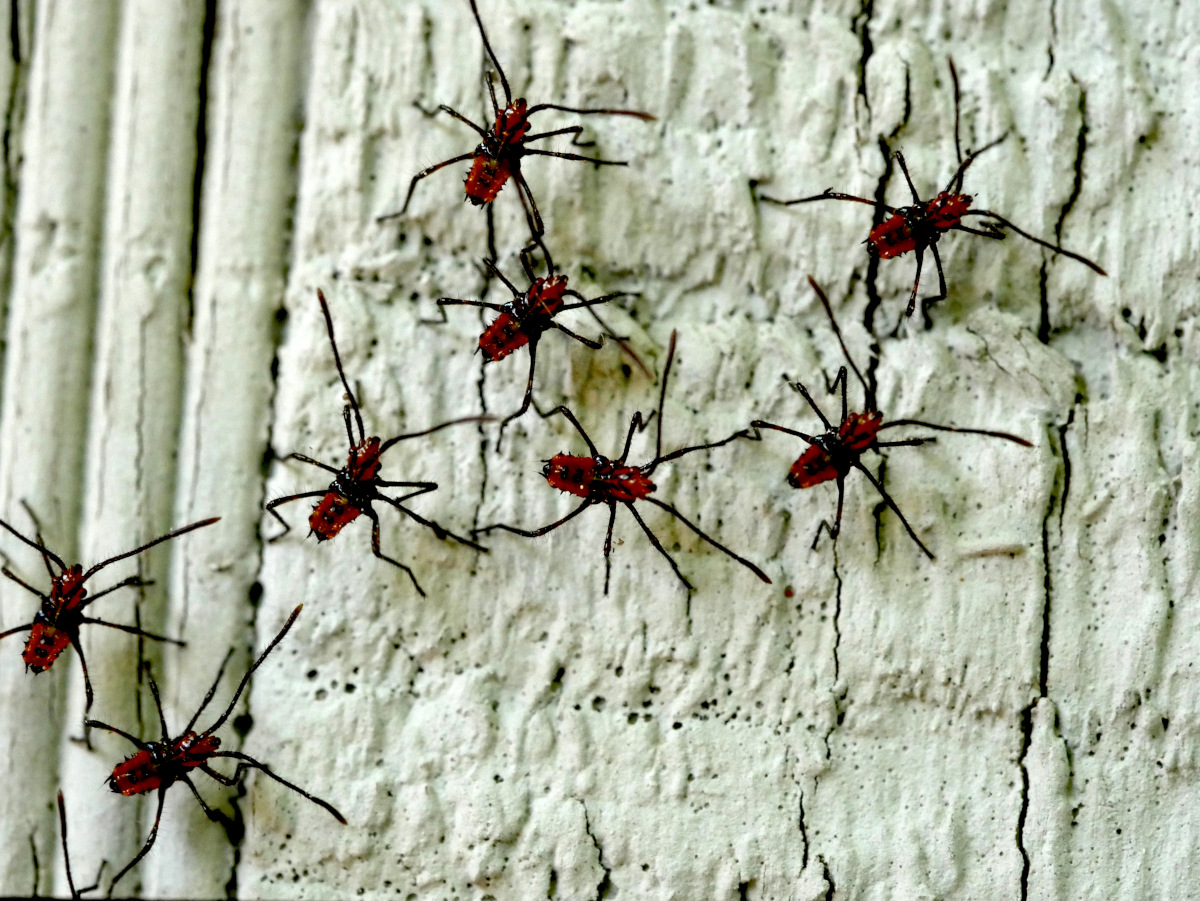 Pica this morning spotted about sixty or so small creatures in formation on the wall of our garden shed. When she moved her hand towards them, they would retreat away a few millimeters. We at first thought these were spiders but looking closely at the photographs they have six legs, not eight. Their body length is about 2 millimeters long.
I ran this photograph through a number of visual identification apps without a great deal of luck, but did come up with some possibilities. They appear to be early instar nymphs of some sort of bug, possibly Rediviidae (assassin bugs) or Rophalidae (e.g. boxelder bugs). Insects are tough to identify, immature insects even tougher.
2 June 26
1 June 26
A Time For Swarming
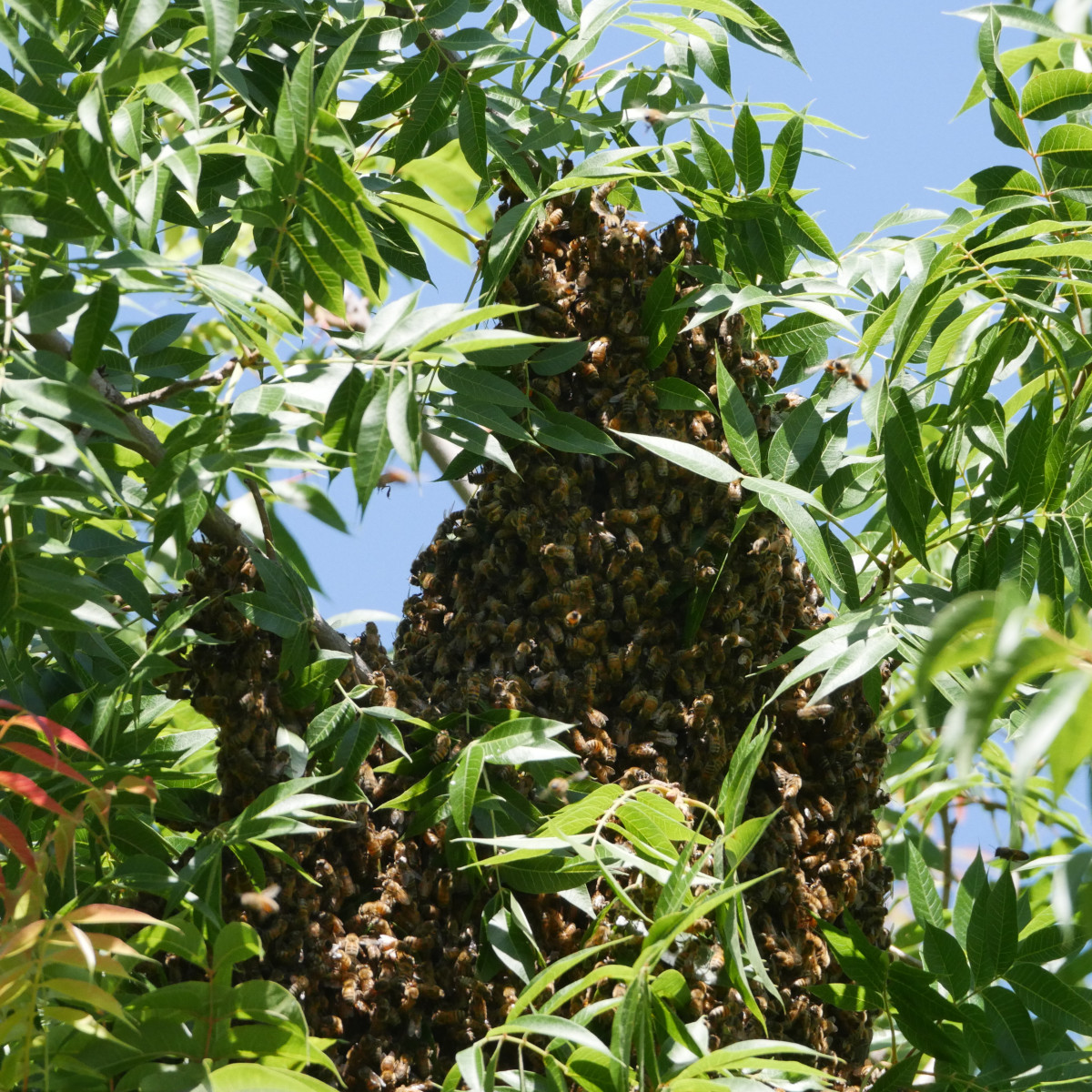 Yesterday afternoon I stepped out our front door and heard a whirring roar coming from the trees immediately to the north. Looking up there were many bees about and clearly there was a bee swarm nearby. The swarm turned out to be in a sumac tree in the yard of our neighbor immediately to the north.
Our neighbor quickly found a response to the new inhabitants of the backyard. There is an organization called Swarmed that is a community-based bee rescue network. At the Swarmed website there is a form to report a bee swarm; soon thereafter a beekeeper gets in touch and volunteers to retrieve the bee swarm to add to their own apiaries. The swarm yesterday was handled by an 83-year-old beekeeper who gathered it up with some sort of vacuum device and transported it (estimated at 60,000 bees in number) to its new home near Marysville.
This morning another bee swarm showed up in the same sumac tree, but about five feet higher. The photo is of this second swarm. Our neighbor reported it through the Swarmed site, summoning a different pair of beekeepers. They don’t seem to be as skilled as yesterday’s beekeeper, and as of 5 PM today the swarm is still up in the tree.
31 May 26
New Postcrossing Stamps are Here
 I wrote before about the new postcrossing stamps. (I pre-ordered some but they haven’t arrived yet.) The stamps were featured at the Boston Expo and Ana and Paulo, the couple from Portugal who launched Postcrossing, were in attendance along with the designer, the USPS art director, and other folks from the post office. There is a lovely writeup about this event here. Also in attendance were over 100 postcrossers who attended a “meetup” in Boston — where postcards are written and signed by multiple people to send all over the world.
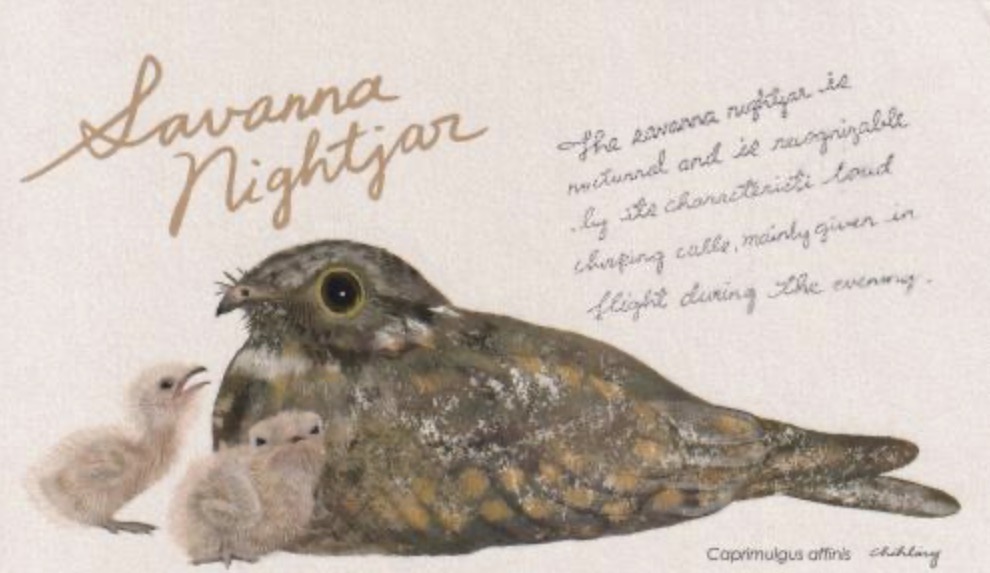
Yesterday I received a card from Taiwan featuring an endemic nightjar. I am so impressed how many people are able to find, and send, bird postcards.
30 May 26
Radical Cartography
One of my habits is stopping by the public library briefly and seeing what is on their new book shelf. This past Tuesday I found a copy of William Rankin’s new book Radical Cartography: How Changing Our Maps Can Change Our World and didn’t hesitate to check it out. Bill Rankin is a historian of technology and the geographical sciences at Yale University. He has been experimenting with cartographic techniques for a couple of decades now and has kept up a library of his projects at the site radicalcartography.net.
To Rankin radical cartography is not so much about the politics of the theme, but rather getting away from the conventions of mainstream cartography with its emphasis on neutrality, deference to data, and aspirations towards a single interpretation. Instead he proposes fostering the values of uncertainty, subjectivity, and multiplicity.
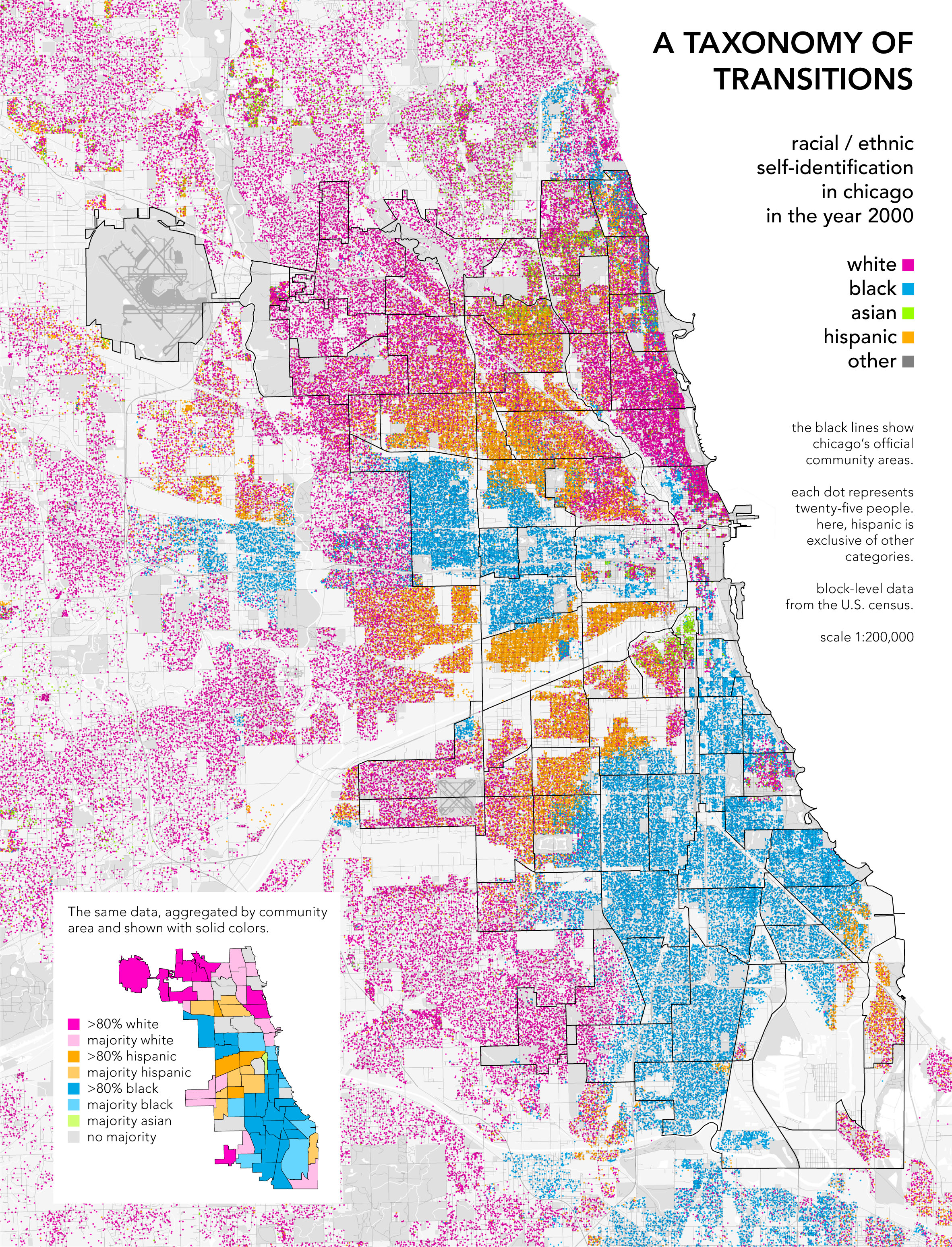
An example of this is Rankin’s work on mapping ethnic self-identification in Chicago. There is a long history of mapping ethnic neighborhoods in Chicago dating back to the 1920s. The maps of these patterns got reified into community areas which became the way Chicago understands its own geography. Rankin’s map illustrates that the transitions between many of these community areas are a lot more gradual than the “jigsaw puzzle” mapping of the areas would suggest. His technique in this map is to do fine-scale dot mapping: each colored dot represents 25 people of a particular ethnicity. This contrasts with shading the entirety of the community area with a color representing the majority ethnicity.
The book is organized by seven different elements of cartography: boundaries, layers, people, projections, color, scale, and time. As somebody who has done a fair amount of cartography professionally, I learned interesting concepts in all seven of the sections. Some of Rankin’s approaches run against my instincts, but that is part of his message, and there are techniques I’d like to experiment with. I’d definitely recommend the book for map lovers and geography students.
29 May 26
Winston
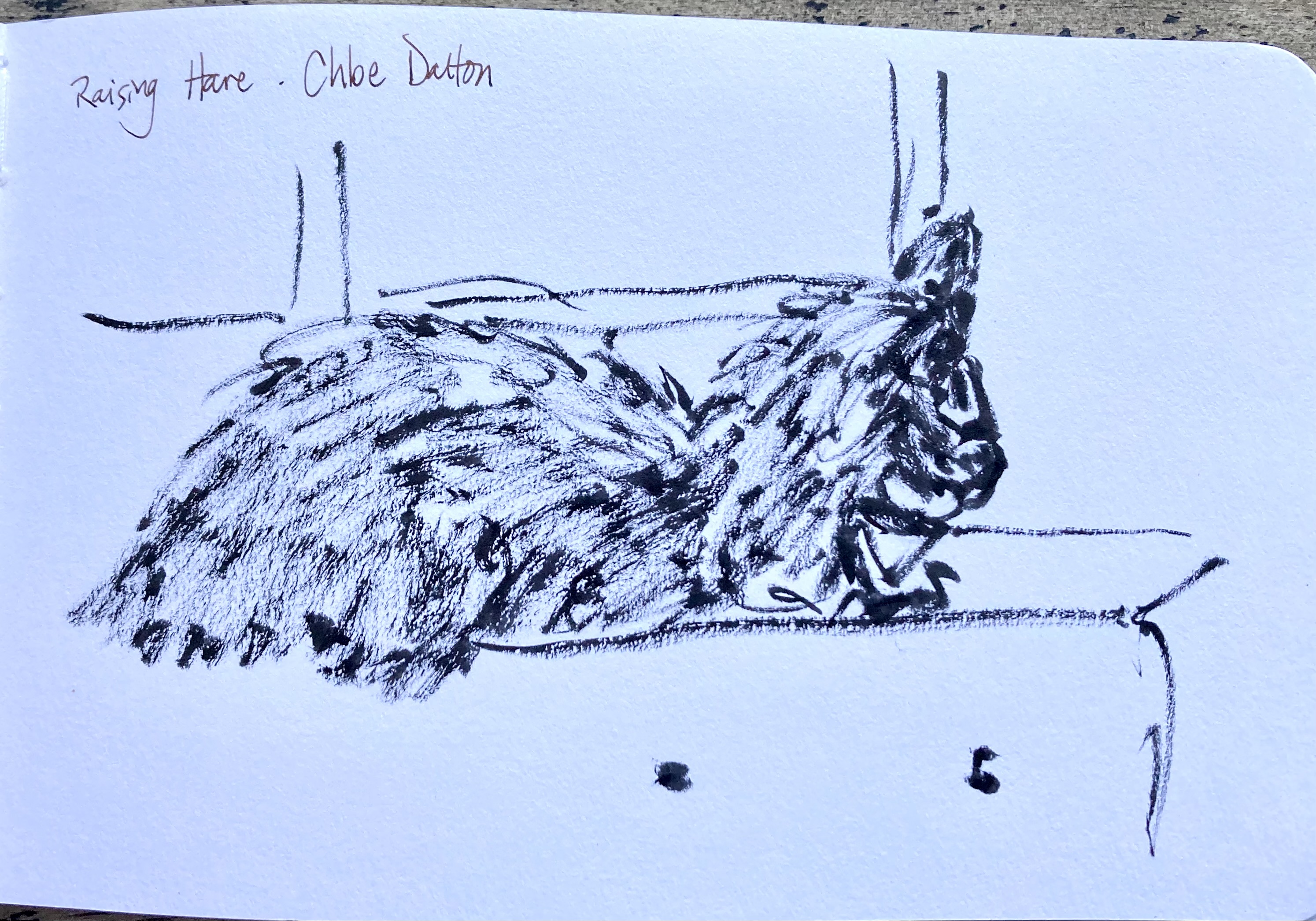 It’s been a while since I drew either of the cats. Numenius does one cat sketch per day. Maybe he’ll include some of his here at some point.
(I had a coffee with a friend this morning who recommended the book I made a note of above the drawing)
28 May 26
Feral Potato
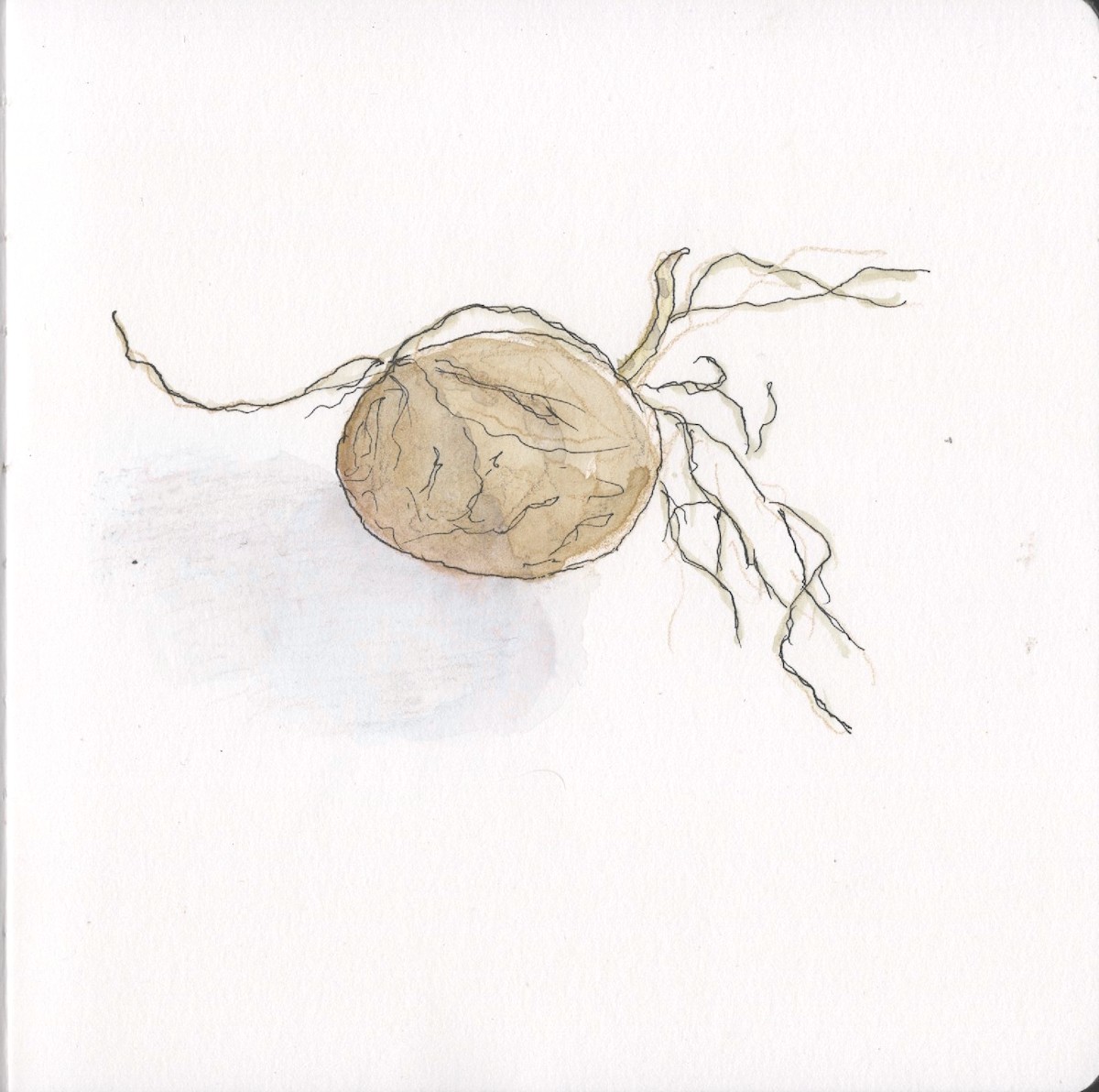 As Pica mentioned yesterday, she unearthed some volunteer potatoes growing from soup leavings used as compost for one of the flower beds. Here is a sketch of one of them.
Lately I have been using black ink in my pen and wash sketches — for some reason I want strong contrast in my linework right now. This is sketched with De Atramentis black ink in a medium Pilot Metropolitan fountain pen.
27 May 26
Weather in May
Yesterday afternoon a thunderstorm dumped half an inch of rain onto us in five minutes. There is no more “normal” weather other than that everything is getting more extreme. I was able to get into one of the flower beds this morning and pull the last of the delphiniums in order to put in some chili peppers (and found five buried potatoes, which made their way into the soup).
One of the roads through Yosemite is now closed because of snow — I’m usually pleased to hear about snow in the mountains but it’s getting late enough to start affecting nesting birds. It will be hot again soon.
26 May 26
Disarming AI
Today I read through the entirety of Pope Leo XIV’s newly issued encyclical Magnifica Humanitas, subtitled On Safeguarding The Human Person In The Time Of Artificial Intelligence. It’s a very rich document which anyone who is concerned with the ethical and moral issues around AI should add to their reading list. Pope Leo’s namesake predecessor Pope Leo XIII in 1891 wrote the encyclical Rerum Novarum about the condition of the working class. In its first two chapters Magnifica Humanitas traces the history of Catholic social teachings from the time of Rerum Novarum to the present. These themes of human dignity and working towards the common good structure the discussion of AI beginning in chapter three.
Whether through direct study or not Pope Leo XIV has absorbed a lot from the discipline of science and technology studies. For instance there is no such thing as morally neutral AI:
In reality, every technical tool embodies choices and priorities through what it measures, ignores and optimizes, and how it classifies people and situations. If a system is designed or used in a way that treats some lives as less worthy, or excludes them without the possibility of appeal, then it is not merely a tool “to be used well,” since it has already introduced criteria that contradict the inalienable dignity of the human person. (Section 104).
Discussions of digital colonialism are readily found among academic critics of information technology but it is much weightier to hear this topic coming from the leader of the Catholic church:
Even today, colonialism assumes new forms. It no longer dominates only bodies, but appropriates data, transforming personal lives into exploitable information. Entire regions, especially those marked by structural fragility and limited geopolitical relevance, are currently subjected to a new mindset of extraction: that of health data, epidemiological profiles, genetic maps and demographic information…Here lies one of the most urgent moral challenges of our time: to ensure that shared knowledge becomes a true common good rather than an instrument of dominance. This requires restoring to individuals not only the data that describes them, but also the ability to decide how it is used, by whom and for whose benefit. Otherwise, the digital age will not be post-colonial, but colonial in another form. (Section 178).
Pope Leo XIV is fond of the expression “to disarm” and this phrase is at the heart of his critique of AI:
To disarm means discrediting the assumption that technical power automatically confers the right to govern. To disarm does not mean rejecting technology, but preventing it from dominating humanity. It means freeing technology from monopolistic control and opening it to discussion and debate, therefore making it human-friendly and restoring it to the plurality of human cultures and ways of life. Our task today is not only ethical or technical. It is ecological in the deepest sense, for it concerns a new dimension of our common home. AI is already an environment in which we are immersed, as well as a force with which we must engage. For this reason, merely regulating it is insufficient; it must be disarmed, welcoming and accessible. (Section 110).
It is easy to find blanket rejections of AI in many quarters but I am heartened that there is a lot more nuance in this encyclical. Technical innovation is part of the divine act of creation but going along with that comes a responsibility towards affected communities and cultivation of the common good.
25 May 26
Consciousness and the Imagination
I just finished listening to Michael Sheen’s reading of The Rose Field, the third in Philip Pullman’s second trilogy, The Book of Dust, following the life of Lyra Belacqua/Lyra Silvertongue. I have not seen any of the visual adaptations of any of the books but was happy to listen to Sheen, who can do a convincing griffon queen and a terrified mouse daemon as well as anyone.
The bonus interview between Sheen and Pullman included at the end of this audiobook has sent me on a long ponder. What is the imagination? What separates us, humans, from animals? What is consciousness? What does it mean to make connections and weave metaphors reflecting our own lives, our lived experience, and particularly, how does the timing of our exposure to these potential metaphors affect the meaning we ascribe to them?