
28 June 11
Field Day
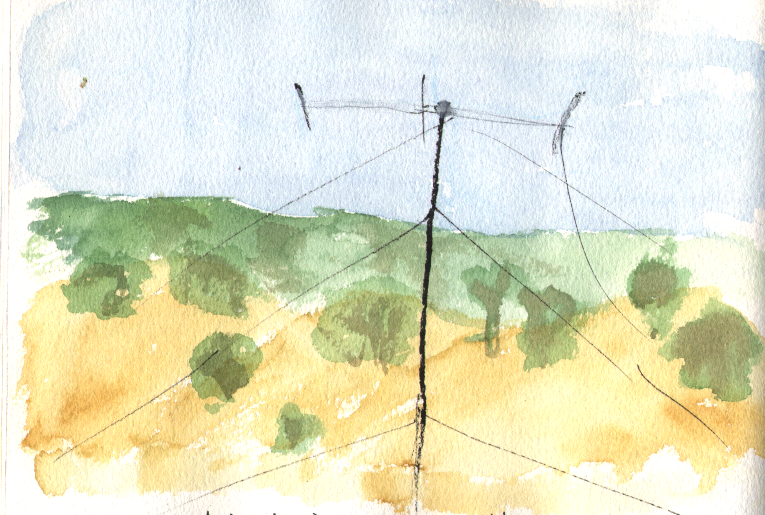 On the fourth weekend in June is Field Day, which is an annual exercise in amateur radio that stresses field deployment and operation of radio equipment often in remote sites and using backup power systems. It is also a chance for many radio clubs to have a bit of an overnight campout. This year our local club the Yolo Amateur Radio Society held its Field Day event on a ranch in the foothills of the eastern side of the Vaca Mountains, in a beautiful blue oak woodland landscape. Though in the past I’ve made a few contacts from home during previous Field Days, we’ve never participated in a club Field Day event, and didn’t know quite what to expect. It was surprisingly fun: we arrived early in the morning on Saturday to help set up, stayed through mid-afternoon, and returned on Sunday for the final couple hours of the 24-hour event and to take down the equipment. The exercise was oddly akin to being on a sailing ship: deploying three antennas with 30-foot tall masts involves plenty of rope work! At left is a picture of one of the antennas we set up and used, a three-element beam for 20 meters and above.
24 June 11
Ted the Stinky Titan
 The Titan arum is blooming again, for the fourth time (once every two years). We saw the first bloom and I thought I’d go over again and sketch it this time. It wasn’t particularly stinky, but little wafts of unpleasantness came my way here and there as I worked my watercolors…
22 June 11
John Ruskin, Meteorologist
I just finished reading Paul N. Edwards’ excellent book A Vast Machine: Computer Models, Climate Data, and the Politics of Global Warming. This book is a history of the information infrastructure that has grown as the sciences of meteorology and climatology have developed since the 19th century. The title of the book comes from the following quote, which Edwards uses as the book’s epigraph:
The meteorologist is impotent if alone; his observations are useless; for they are made upon a point, while the speculation to be derived from them must be on space…The Meteorological Society, therefore, has been formed not for a city, nor for a kingdom, but for the world. It wishes to be the central point, the moving power, of a vast machine, and it feels that unless it can be this, it must be powerless; if it cannot do all it can do nothing. It desires to have at its command, at stated periods, perfect systems of methodical and simultaneous observations; it wishes its influence and its power to be omnipresent over the globe so that it may be able to know, at any given instant, the state of the atmosphere on every point on its surface. — John Ruskin (1839).
John Ruskin as a twenty-year-old was into meteorology. Who knew?
17 June 11
Life Atmospheric Phenomenon
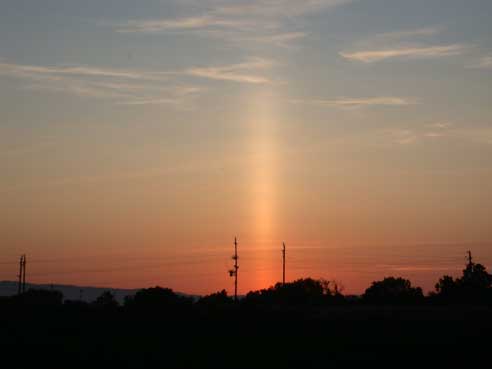 Seeing crepuscular rays at sunset is unusual, but I can remember a few in my fifty-odd years. Seeing a single beam of light going straight up is one I’ve never seen before. Known as a buddha ray, it probably has engendered numerous UFO-calls today from northern California.
This month the birth, enlightenment, and death of the Buddha are celebrated. The theory goes that any merit gained during this lunar month is magnified. May our thoughts turn to generosity and to the light.
13 June 11
Century of Challenges
Today we went down to Albany to hear blogger and polymath Nicole Foss who writes as Stoneleigh at The Automatic Earth speak about global energy and financial crises. Nicole has been touring both North America and Europe giving her talk entitled “A Century of Challenges” with an aim of helping turn the virtual community that reads her blog into a set of real communities that are working to prepare for future change. The talk was hosted by Transition Albany, one of many hundred such groups that are part of the Transition movement across the world that are working to come with local adaptations to shrinking energy supplies and problems with climate change. Nicole’s prognostications are grim — not that her message to expect a deflationary depression is new to me, having been reading her and her writing partner Ilargi’s blog for several years now — but we left her talk feeling inspired. Nicole says she’s trying to provide “a psychological inoculation” against the human herding behaviors of fear and anger, the inoculant being that by working within community there is in fact a lot we as individuals can do to try to prepare for future upheaval.
7 June 11
Hwaet!
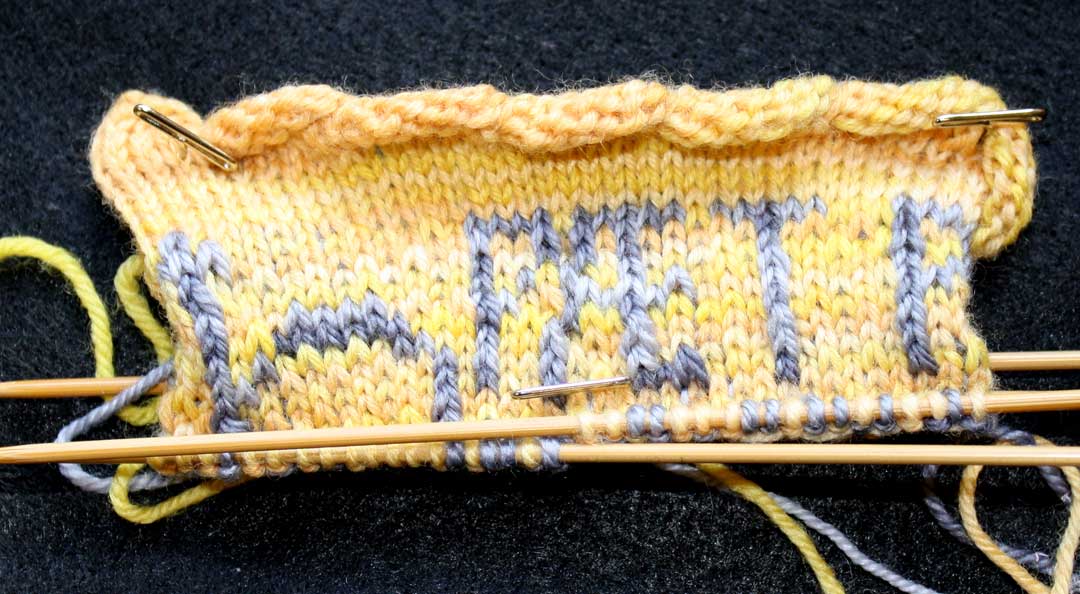 I’ve been really good about keeping the number of knitting works-in-progress (WIPS) down to a manageable level. I finished a shawl this weekend that had been on the needles for a while.
I cast on another shawl (need my lace fix) almost immediately and then, last night, I cast on my Beowulf socks (the first lines of the poem are carried through one sock then pick up on the next where you left off. The yellow yarn I bought is a little lurid compared to the recommended yarn, whose name is “South Side Chicago.” Since this was (still is?) a notorious slaughterhouse district, I can only assume the inspiration for the colorway was soiled straw. I can probably mimic this effect if I throw the socks in some walnut ink when I’ve finished.
I can think of at least eight people I’d make very happy with some socks like these, but full stranding all the way down is slow. It’s very fun, though, but it’s a high-concentration activity. Hwaet!
6 June 11
Loaves For Learning
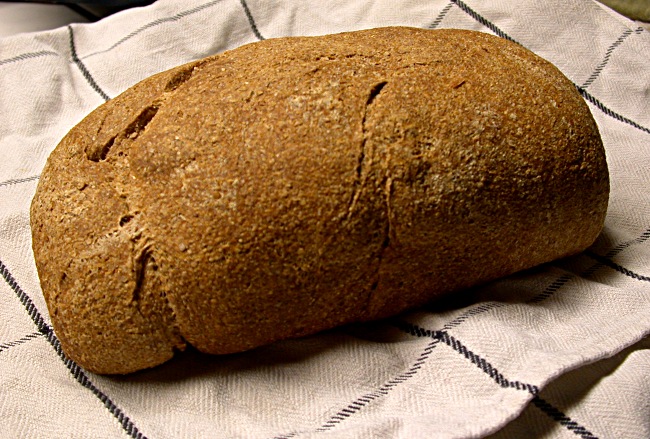 For some reason I’ve gotten it in my head to work my through the recipes in the Laurel’s Kitchen Bread Book, baking a couple loaves of bread each weekend. I’ve been doing this for several weeks now. At left is what I baked today, a molasses bread recipe. This is made with coarse stone-ground flour and has an overnight first rise.
29 May 11
Indigoing
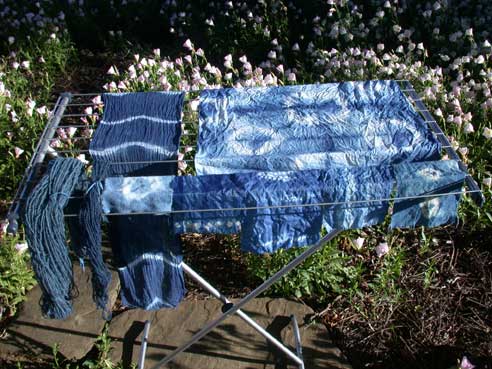 I attended a workshop in Berkeley yesterday put on by the Spindles and Flyers group (lovely to see Lisa there). It was an indigo dyeing workshop using greener chemicals. This doesn’t mean we fermented a pot of indigo for ten days in urine, which is also a green method; we used slake lime, iron phosphate, and indigo. (The more toxic combinations from the nineteenth century involved sodium hydrosulphite and zinc-lime formulas.)
Barbara Shapiro encouraged us to bring personal projects to dye (I brought some Jacob handspun, woolen spun three plies; it’s at the lower left in the photo). She gave us samples to try different shibori resist techniques on — cotton, linen, rayon, silk, and wool. The same exact exposure to the dyebath produces very different results depending on the material being dyed. Wool produces a sort of Prussian blue, “sad” blue as Barbara called it. Silk doesn’t take the dye so strongly and leaves sections that are more yellow, making the whole look like a cyanotype. Rayon takes the dye very quickly and strongly. Cotton and linen make a beautiful deep blue. We learned that Japanese master dyers sometimes do 18 dippings to get a rich, deep blue. (The only piece I dipped more than once is the scarf at the upper left; it was dipped twice. Now that it’s dry it’s much lighter than in the photo. I can see dipping 5 or 6 times. The caustic solution is not good for wool so I wouldn’t want to do more than 3 or 4 for wool, though.)
Oxidation is what makes this work — the fabric is green in the dye bath and on contact with air almost immediately turns blue. It’s magical. We were all sent home with residual dye from the class and I have some plans for some undyed merino-silk.
23 May 11
DC 2011
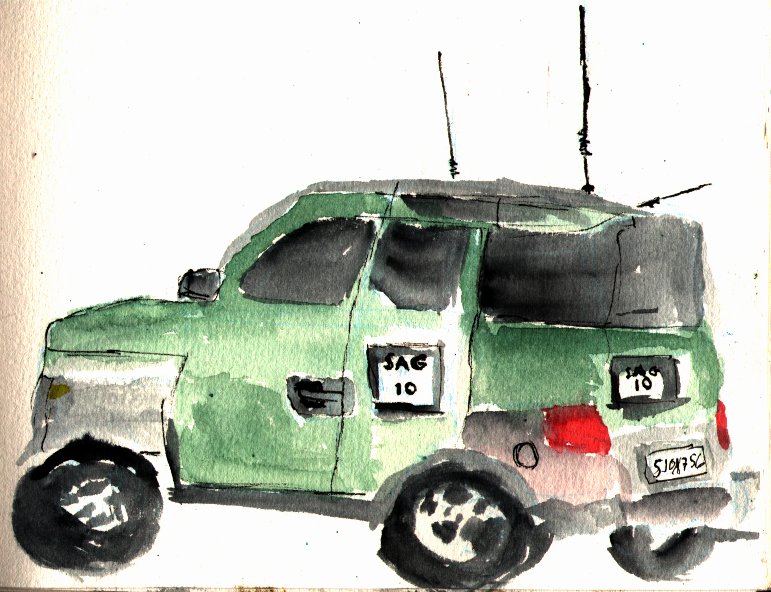 On Saturday was the Davis Double CeIntury, the epic 200-mile cycling event now in its 42nd annual edition. As we have done for the past several years we helped out by providing radio support for the event. I worked all day at start/finish helping to operate the radio net control, and Pica drove the course as a sag support vehicle (SAG 10). (If anyone can provide a convincing etymology for the use of the word “sag” in cycling, we would be quite interested.) The weather was quite pleasant for the event (partly cloudy with a high around 80 degrees, and the riders seemed to fare better than usual as a result.
At left is a sketch of our Honda Element tricked out with ham antennas for the event, a dual-band 2 meter/440 Mhz antenna for voice communications, and a smaller 2 meter antenna for the GPS radio tracker.
18 May 11
Ground
When the noise of
rapes and gropes and
men in power
(and men not but
wanting it SO MUCH)
gets too loud
I dig.
In earth
softened by
unhoped-for rain,
earthworms teeming
in a second spring,
tilling improbable loads of
well-seasoned manure
in through loam
and silt. Dig.
Mocked blackbirds and
squabbling swallows swirl as
mud gloms on to my
boots and barrow-wheel.
Dig in grief
for women
silenced by fear.
Fork the rage
into the earth,
go gentle.
Dig: invite
all to sit
at an ancient,
wormeaten table,
sharing the harvest.