
4 April 26
Big Four Building
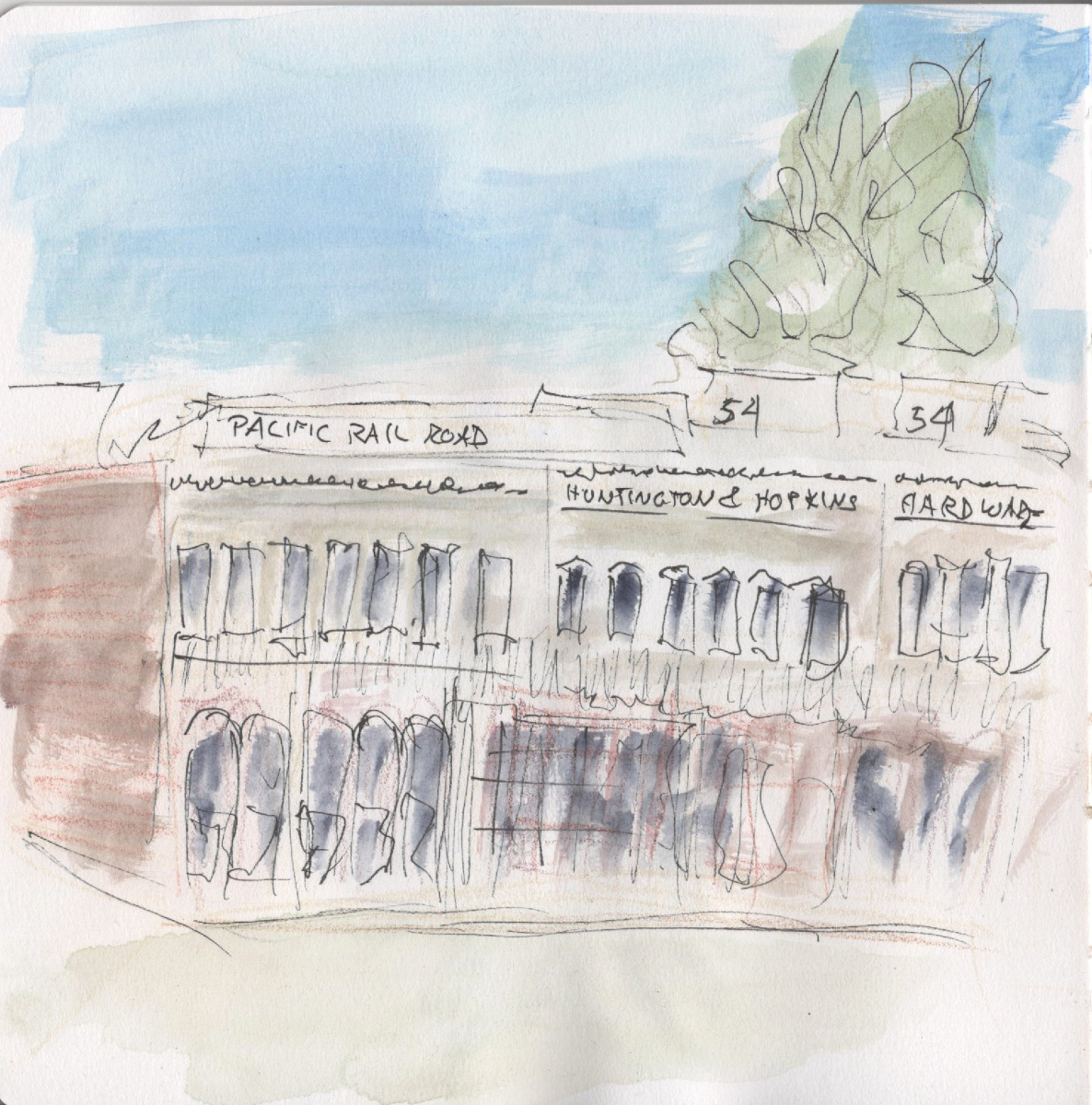 Yesterday I went on a return outing to Old Sacramento, a follow-up to my visit to the Crocker Art Museum the previous Friday. The most interesting exhibit at the Crocker was a show of screenprinting from the Royal Chicano Air Force which is an art collective from Sacramento prominent in the 1970s and 1980s. When I walked back via Old Sacramento I noticed that the Sacramento History Museum had another exhibit on the RCAF that was closing soon, so I decided to come back to Old Sacramento yesterday to see that exhibit and do another sketch. This is the so-called Big Four Building, which is the hardware store where the founders of the Central Pacific Railroad initially got extremely wealthy selling goods to Gold Rush miners. The founders were known as the Big Four, and were Collis Huntington, Mark Hopkins Jr., Leland Stanford, and Charles Crocker.
3 April 26
Chilly Copenhagen
 I arrived in Copenhagen in the dark after hours and hours of travel. I was to meet a childhood friend — my best friend, really, certainly my longest-lasting — and her husband here the following day.
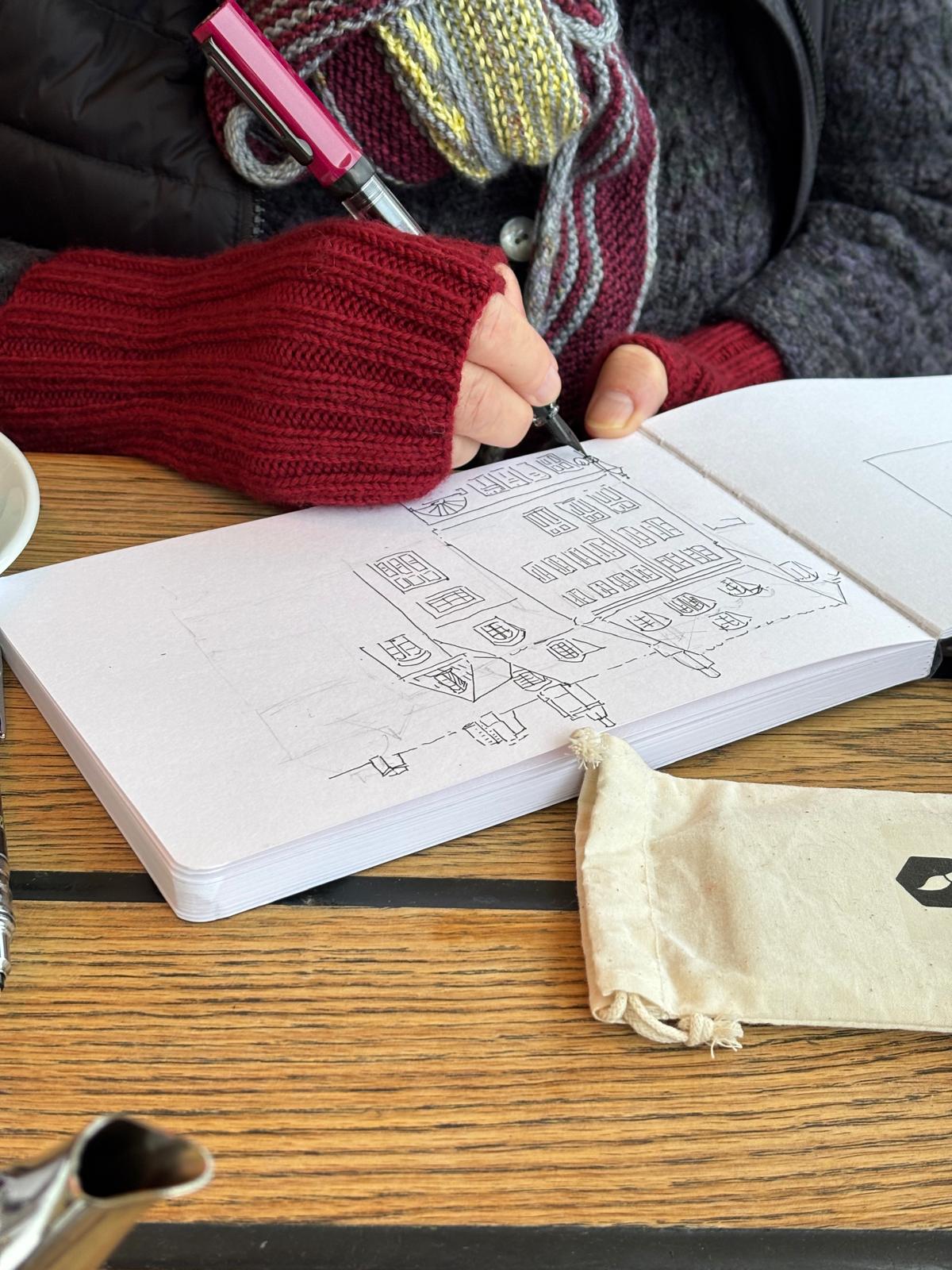
We all drink tea, copiously. This meant finding somewhere after lunch where we could have a cup of tea and I could sketch without us all becoming hypothermic, so we ended up at a bar with outdoor heating on the Nyhavn, a big cliché, I know, but this is where we found.
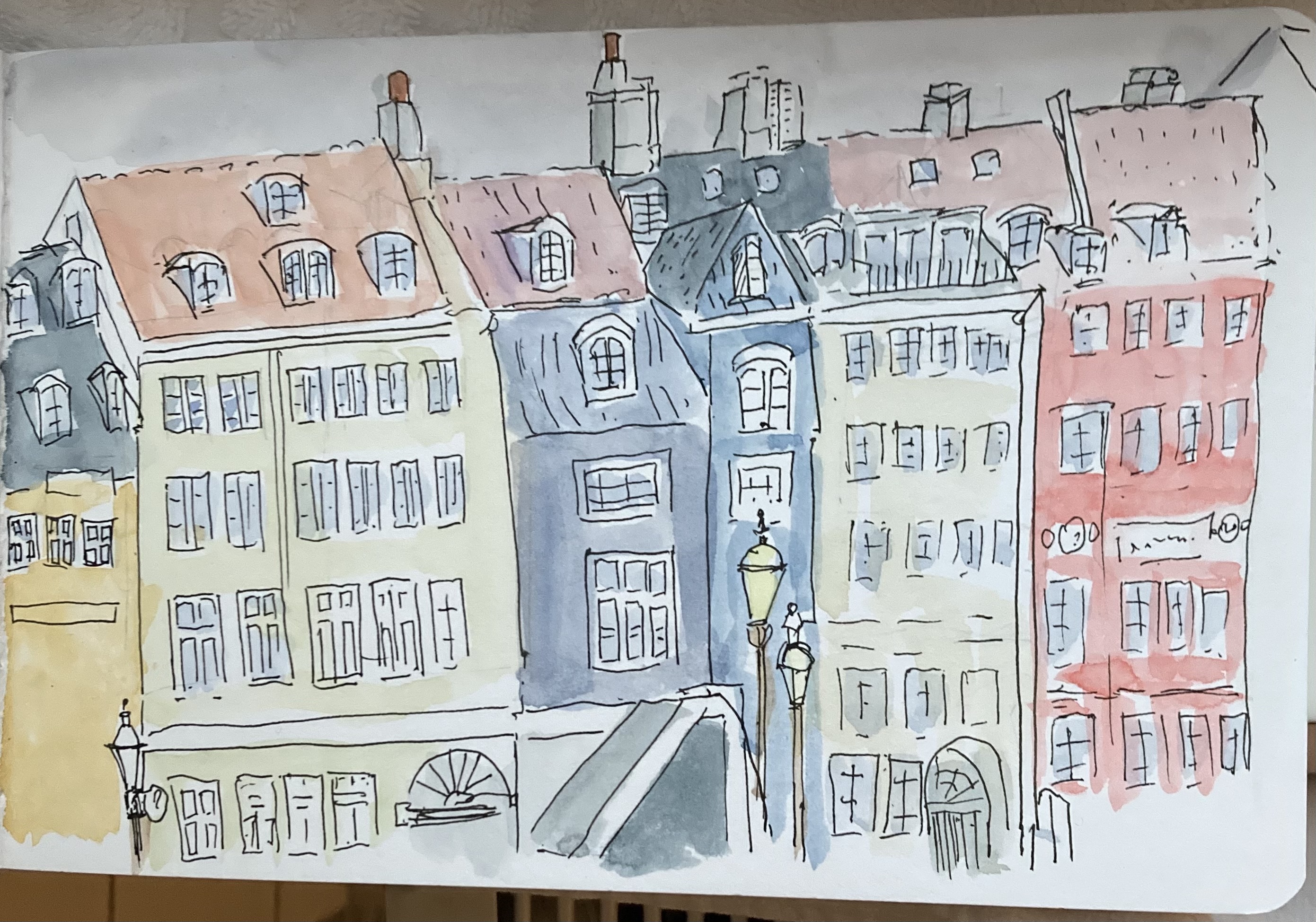
I am not very good at drawing buildings and I didn’t have unlimited time but here’s my sketch, which I colored in after I got back to our hotel… Today was a brisk walk through the wind and cold of the Naturpark Amager, a territory formerly owned by the Danish military which is being allowed to rewild itself. We had hoped to see birds and I did see my life barnacle goose, or rather several thousand of them, but mostly it was a long walk in the wind. (We did help an elderly man with dementia reconnect with his son, which seemed like a kind thing to do.)
2 April 26
Tangerine At Large
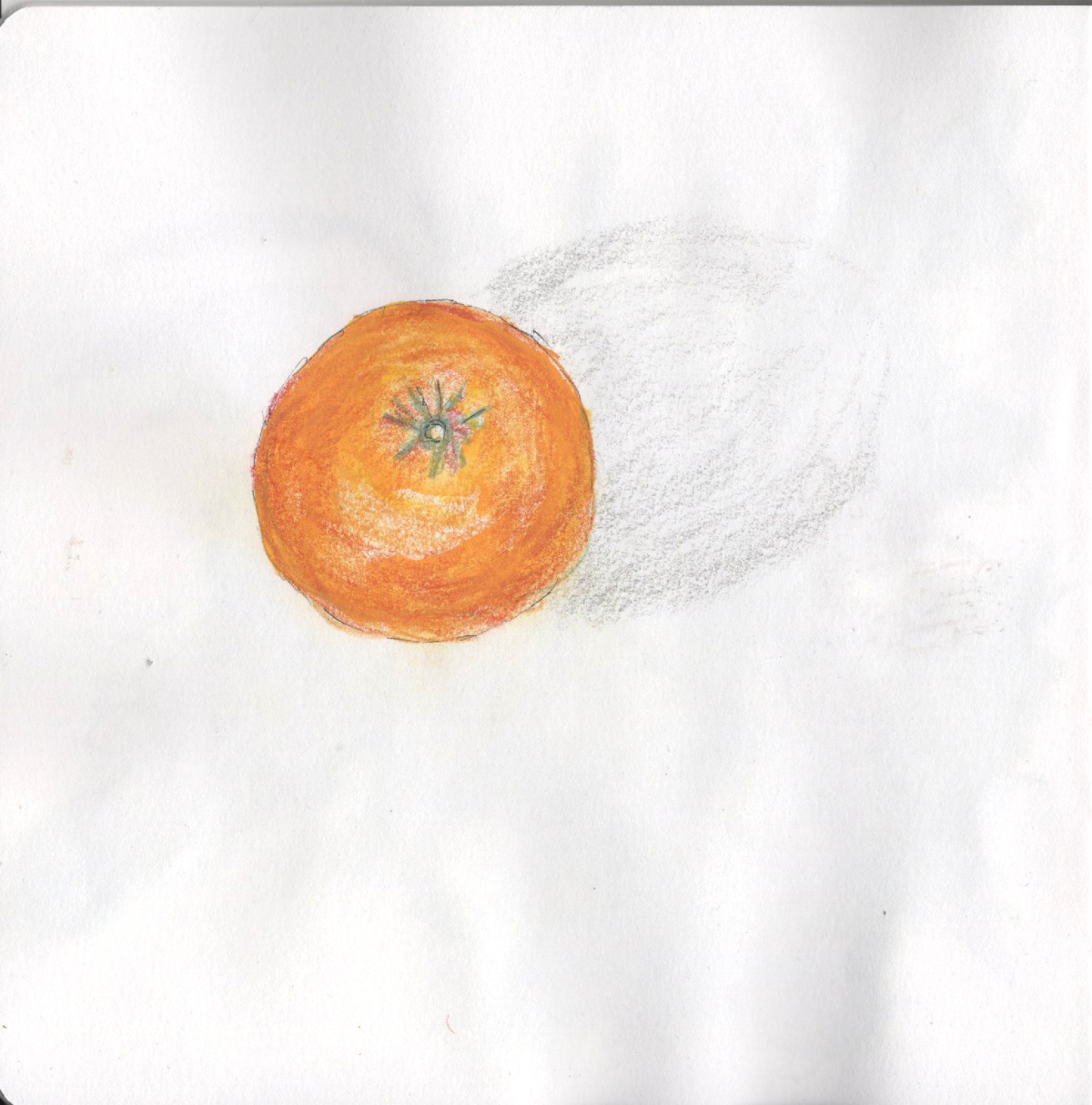 I’m continuing to practice my multimedia technique of sketching an underdrawing with my Derwent drawing pencils, then adding some ink lines for definition, and then adding a watercolor wash over the drawing (in this case the Inktense mango pan color). Here is a tangerine from Tuesday’s grocery shop.
1 April 26
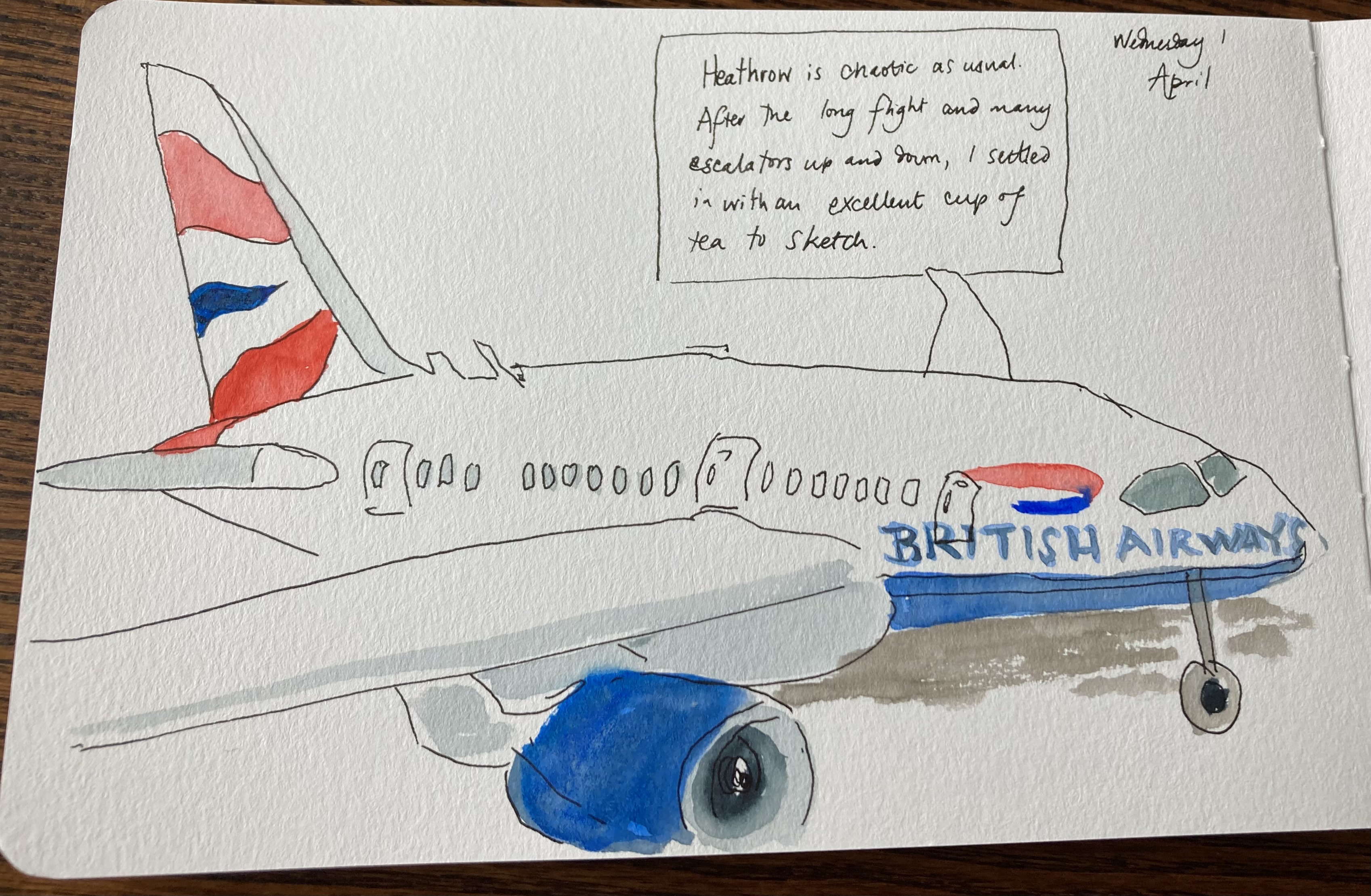
1 April 26
Awaiting A Moon Launch
The world is in even much more of a train wreck than when I first reported on this at the end of January, but there might be a launch to the moon tomorrow! At the moment we have 16 hours before launch of the Artemis 2 space rocket that will send four astronauts on a loop around the moon. It’s quite possible the launch will be scrubbed tomorrow due to a mechanical difficulty or weather (there’s a 20% chance of the latter), but the launch window for this month extends a few more day so they’d be able to try again the following day.
I will be following this actively tomorrow afternoon. Trump is scheduled to make some pronouncement about the Iran war in the evening — nobody knows what direction he’ll go on this — and is usurping all broadcasting for that; I will not be watching that. Ugh.
30 March 26
What to Take
I’m heading out tomorrow on a trip to Germany. I’ve been studying German fairly assiduously since the start of the pandemic and though I grew up in Europe I never went to Germany.
I have some rules about traveling, which overlap a lot with Numenius’s (though not entirely, and in this case we’d have very VERY different itineraries). One is, hand luggage only, whether for a week or a month. Two is, forget cameras; bring minimalist sketching equipment (you know that advice where they tell you to put all the clothes you plan to bring and cut it in half? I had to cut my sketchbooks into a QUARTER). Three, have plenty and diverse things to keep you entertained (I have knitting, audiobooks, and access to whatever films they show us on the 11-hour or so flight in addition to my sketching stuff).
I’ll be seeing friends and exploring different places on my own, all of them in the western third of Germany. An excursion to Bingen to stay in the Benedictine convent for three nights is particularly appealing: I’ve been reading a lot about Hildegard and have to figure out how to say what I’ve learned in German in case a nun sits next to me at breakfast and asks me why I find her so compelling.
I’ll plan to blog here on the usual schedule but it might be brief and very sketch-heavy. Short stay in Copenhagen at the beginning to see some friends from Sweden; hoping for some lingering winter seabirds!
29 March 26
Wikipedia At Home
Both Pica and I had the Encyclopedia Britannica at home when we grew up, always at hand to dig into some topic of interest. Nowadays Wikipedia plays that role, the jewel of the Internet, a master reference only one bit of typing away. But what if…something happen to the Internet? A tech enclosure movement or collapse of the root level domain name system or rampant cyberwarfare?
It turns out one can download all of Wikipedia pretty easily. Since 2007 there has been a project called Kiwix that has created a system for taking extremely large knowledge stores and compressing them into single files that are easily viewed with special software offline.
This software is not difficult to run and is available for all major platforms. Their catalog lists 3458 different works that have been compiled into this file format in many different languages. I’ve had a go and have downloaded the complete English Wikipedia, Wikispecies, and resources from iFixit. The Wikipedia file is 115 GB in size and took several hours to download.
It’s a comfort having Wikipedia on my own hard drive. You never know.
28 March 26
No Kings, Again
 This morning we went to Winters to attend a No Kings rally. We knew it would be small and easy to get to compared to the much larger march from West Sacramento to the Capitol. Winters was very accommodating of people with mobility problems and featured a lot of sing-along music.
In the afternoon Numenius also went to a family-friendly gathering here in Davis (this photo is his and features local celebrity Whymcycler Peter Wagner).
From all accounts the turnout at today’s rallies set a record. The trick will be to have a massive turnout of voters in the mid-terms. Assuming they don’t get cancelled… at this point anything seems possible.
27 March 26
Riverfront Outing
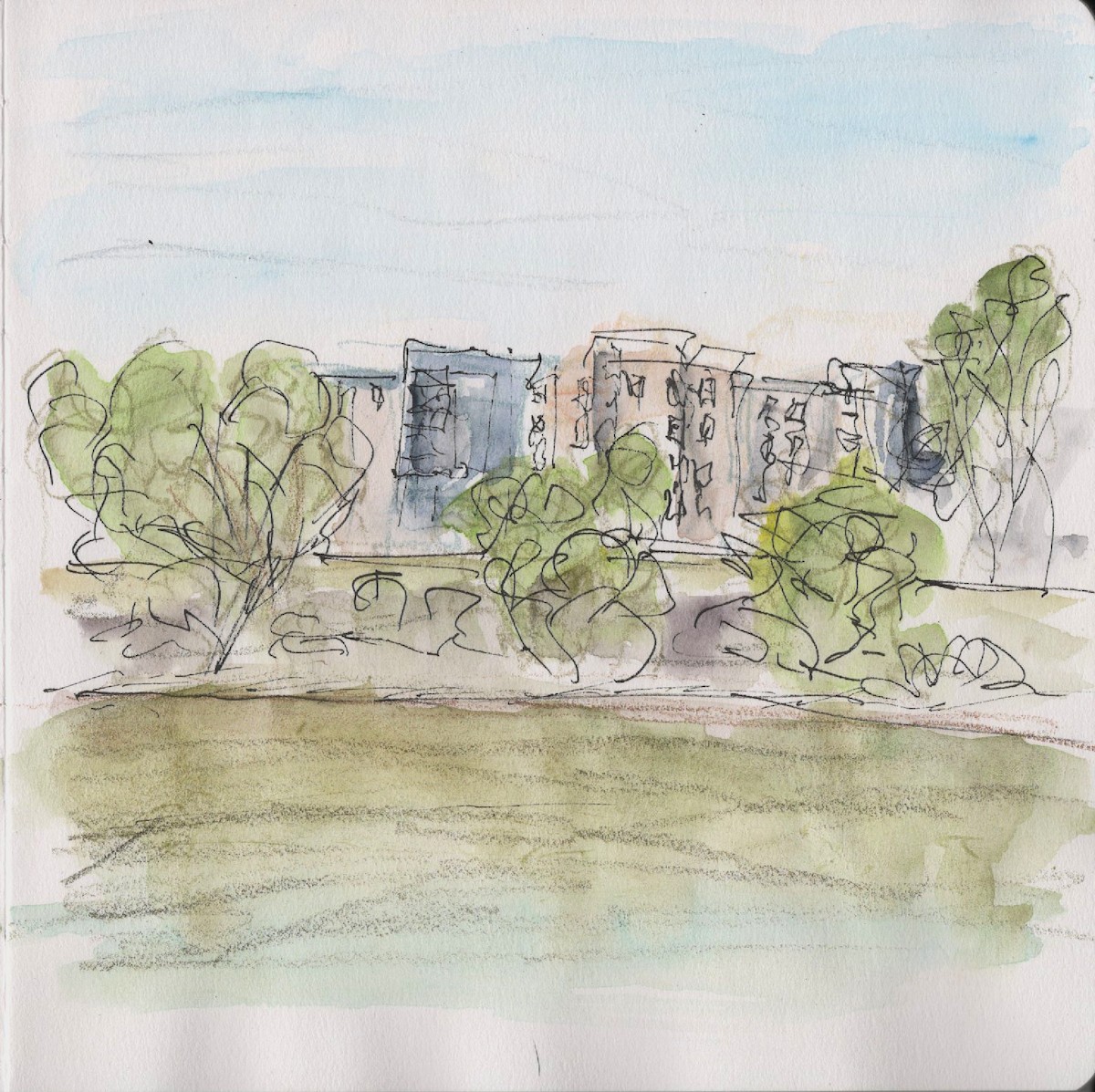 Today I went on a little outing to the Crocker Art Museum in Sacramento, walking to the museum from the Sacramento train station via Old Sacramento and the riverfront. Old Sacramento is the most touristy area in Sacramento; it developed during the Gold Rush. Since I have been reading a lot about Northern California history in the latter half of the 19th century and pondering the Gilded Age fortunes that were made during that period, it’s neat to see the actual storefront where Collis Huntington and Mark Hopkins made their wealth off miners needing supplies. This is a sketch looking west across the Sacramento River downstream from the Tower Bridge.
26 March 26
A New Short Row Technique
 Short rows in knitting are used when you want a different amount of fabric in one section of a row than another without adding length at the end of the row. Typical uses include knitting a sock heel to make the L-shape of a foot, adding length to the back or front of a sweater (this can be extreme to accommodate a dowager’s hump or slumping shoulders or a large bust), or to shape a sleeve knit horizontally, as I’m doing with my Fort Amherst sweater.
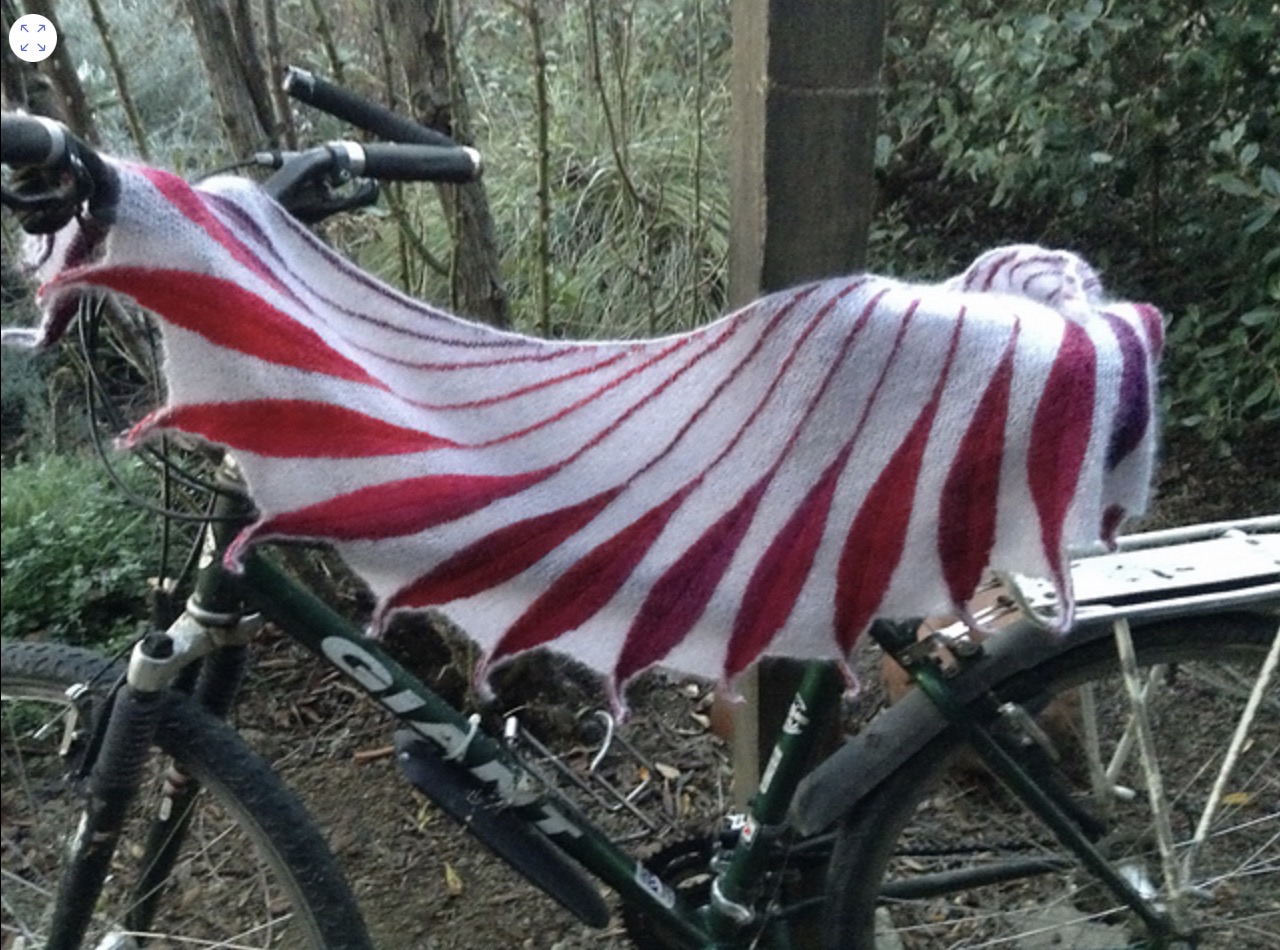
For years the only short row turn I knew was the wrap-and-turn, where you knit to the desired stitch, yarn forward, slip next stitch, yarn back, turn work (in the middle of a row). It’s clunky and inelegant except in garter stitch, where the bulk of the knitting hides a multitude of sins… With the internationalization of knitting I learned, and much preferred, the “German” short row, where the stitch is yanked hard over the needle making a “double-stitch” which you then knit as one on the next row. This has been invaluable in the swing-knitting technique where short rows are flung around with abandon to make some very interesting effects (I’ve knit the Dreambird shawl several times using this technique, pictured at right draped over my late-lamented bicycle which got stolen a couple of years ago).
The Fort Amherst project has introduced me to a third method, the Japanese short row (though designer Jennifer Beale calls this “Sunday short rows” in her pattern). Here, a removable stitch marker is placed over the working yarn, the return row is knit, but on the way back, you pick up the yarn held by the stitch marker and knit it together with the following stitch, removing the stitch marker. It is all but invisible! It might become my go-to method.