
2 September 25
Storm At Dawn
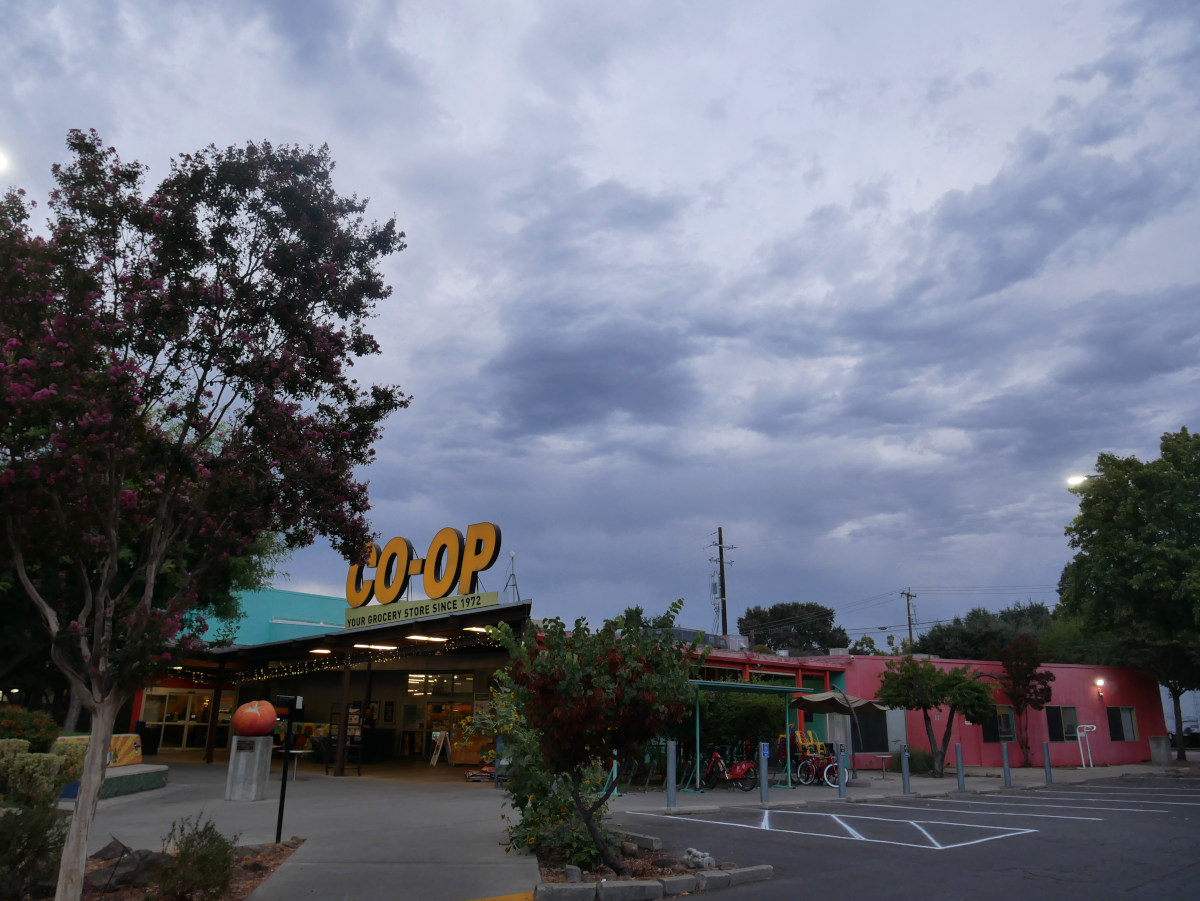 A monsoonal weather system has come up from the south over California today, and around dawn this morning we had thunder and lightning and a few drops of rain. It cleared up by midday and we were able to set up the solar cooker this afternoon to prepare some lentils. The thunderstorms are now over the northern Sierras bringing with them a risk of wildfires.
Here is a view of the clouds this morning, taken a little after 7 AM from the food coop parking lot.
31 August 25
Metro Systems That Ought To Exist
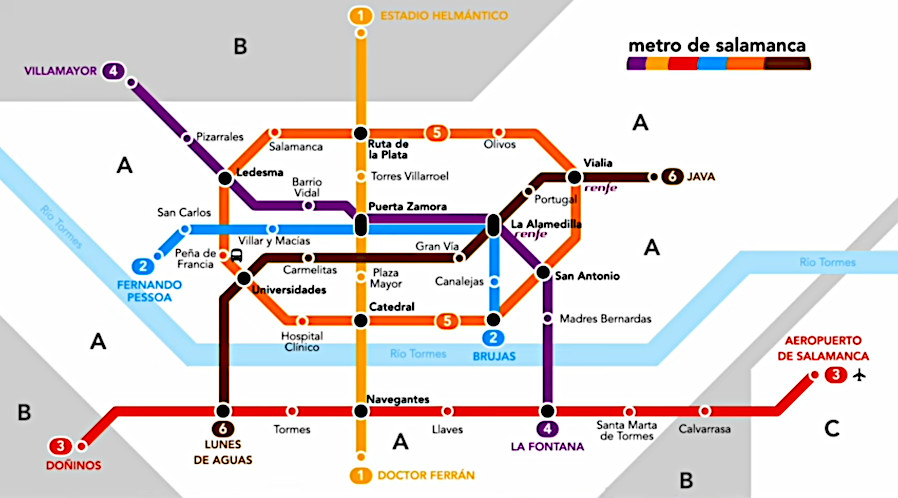 Metro systems are one of the great urban inventions but unfortunately there seems to be a minimum urban size before they get built. That doesn’t mean they can’t be designed in imagination. A YouTuber by the name of Helio Roque has started a project entitled “planeando metros que no existen” and has designed three of these so far, the cities being Badajoz, Salamanca, and Benidorm. Here he presents the creation of his map for Salamanca.
25 August 25
A Visitor From The Grapevines
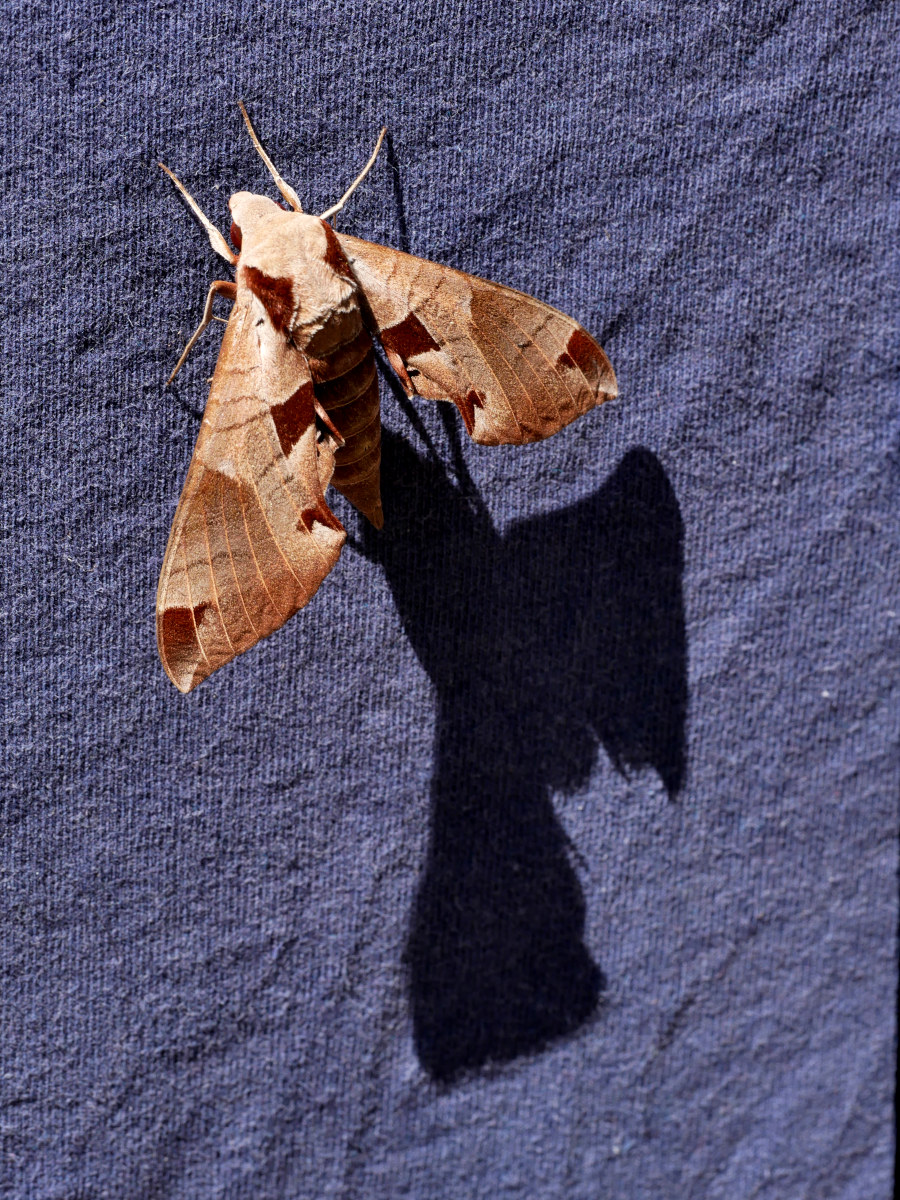 Last Wednesday (20 August) we got to admire this moth all day long when Pica discovered it resting on a t-shirt hanging on the laundry line out back. This is an achemon sphinx moth (Eumorpha achemon) in the family Sphingidae. Their caterpillars feed on wild and cultivated grapes. Its presence makes sense because we have grapevines along the fencing on two sides of our yard, though we have never observed a caterpillar in the vines. The moth left the t-shirt some time over the night.
17 August 25
Daily Sketch - Young Oak
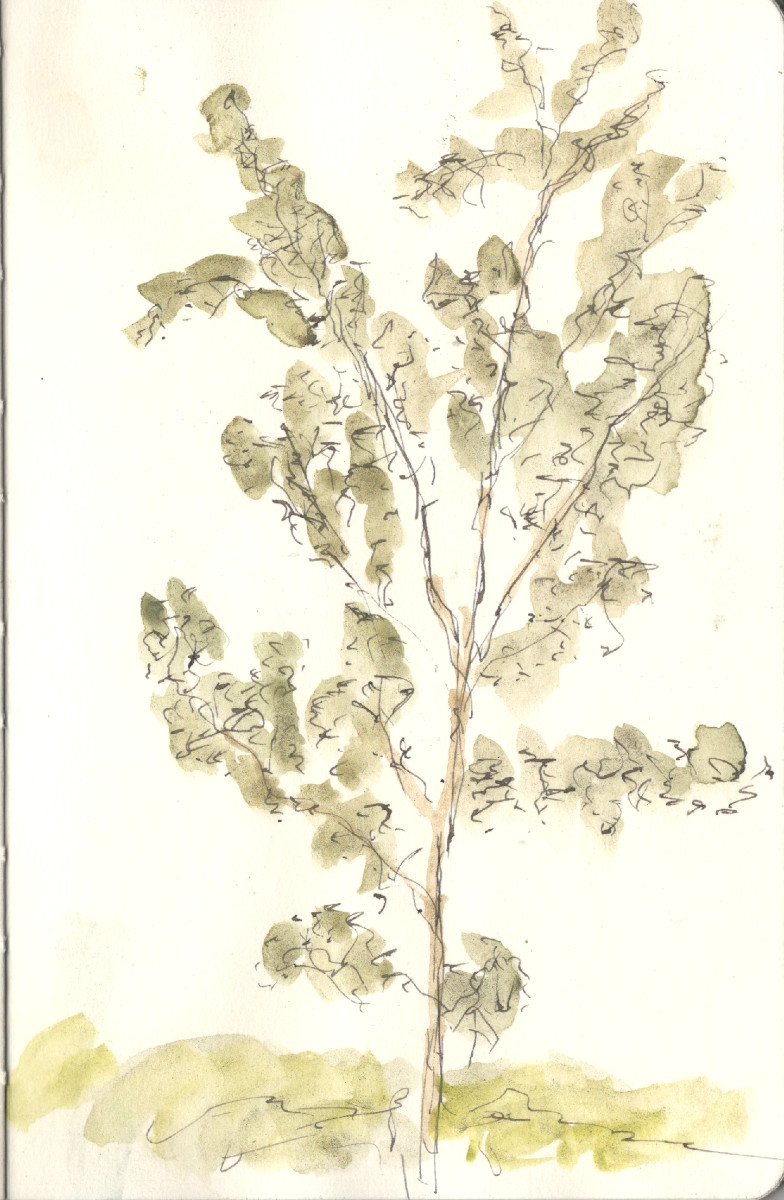 For today’s weekend tree sketch I ventured out on bicycle to the local arboretum where to no surprise there are many trees. I sketched this young oak with De Atramentis Urban Gray ink and used Derwent Graphitint pan paints for the wash. I like the Derwent Graphitint pan set a lot. The principle of the Graphitints (both in pencil and pan paint form) is that they are watercolor pigments mixed with graphite particles which mutes the colors a lot. Using the pan set I find I can mix a lot of realistic greens, and muted sketches work well at times.
11 August 25
An AI Lesson From Urban Forest Mapping
Today I fielded an email from a staffer at the California Air Resources Board about the following topic, and I think there’s a general lesson to be had here. Between 2021 and 2023 I worked on a project that was looking at the extent of and ecosystem services provided by the urban forests of California. This was a follow-on to an earlier project our lab had done in 2015 about the same topic, and one of the goals of the project was to do a change analysis between the two time periods. For the question about urban forest canopy extent, we were working with high-resolution tree canopy cover datasets from a company called EarthDefine. In particular, we were comparing a canopy cover data layer from 2012 (used in our 2015 analysis) to a canopy cover data layer from 2018. In theory, all one has to do to measure in canopy cover extent is to subtract the 2018 layer from the 2012 layer. Pixels where there was canopy cover in 2012 but not in 2018, or vice-versa, would represent change.
In practice, we soon discovered this wasn’t going to work at all. These canopy cover datasets were developed using machine learning models applied over NAIP imagery, which is high-resolution aerial photography produced periodically in a program run by the US Department of Agriculture. When we compared the canopy cover maps in 2012 and 2018 with their source imagery, it was evident that the machine learning models for two canopy cover datasets used very different ideas about how to recognize and delineate trees in the source imagery. This resulted in unrealistic change statistics, for example the urban canopy cover in Riverside County purportedly increasing from 2012 to 2018 by 20%. Basically, the comparison was between outputs from different machine learning models applied over different datasets (in particular the 2012 imagery had a resolution of 1 meter, and the 2018 imagery had a resolution of 0.6 meters) — apples and oranges.
The general lesson for AI is to be very careful about extending an AI model beyond the domain over which it has been trained. Sometimes this works, but many times it does not, with deleterious consequences. In particular, this is one of the antipatterns that can result in AI bias.
10 August 25
Ripe Figs
While I was gone the figs on the tree out front got ripe. They have been the object of interest of the scrub-jays and squirrels, but this morning I saw the tail end of what I thought was a Nuttall’s woodpecker. It came back and turned out to have been a female black-headed grosbeak.
We had a fig tree out front when we lived at the Trout Club in Santa Barbara nearly 30 years ago; a grosbeak would visit it regularly when the figs were ripe. Numenius once made a fantastic sketch of one with fig detritus all over its beak; I wasn’t able to put my hands on this sketch today. I did try to capture the bird this morning (apologies for haste, I was also on the phone at the time) but afterwards also found evidence of its work, shown below.

29 July 25
Geology from the Air
 The flight path from Sacramento to Seattle is full of volcanic wonders. First are the Sutter Buttes, proclaimed the smallest mountain range in the world. Next comes Mount Shasta, towering over Northern California and still, in late July, snow-covered. Into Oregon is Mount Hood, the astonishing Crater Lake, then approaching Seattle, Mounts Baker, and Tom in the distance, and Rainier to the east.
I know we live in a geologically active area of the world, but in Davis, you see little evidence of this. Today I had a good reminder that there’s a lot of geology all around.
Postscript: I do know it’s not a great idea to bring fountain pens on planes, but I do it anyway… Also, I wrote this before I heard about the 8.7 magnitude earthquake in Kamchatka, which reminds me also that yes, the Pacific Rim is a powderkeg.
23 July 25
Two Days at The Marine Mammal Center

I have just spent two days in the fog on the Marin Headlands, doing graphic recording for a workshop on vessel strikes on whales. Climate change and other causes are forcing whales to change their movement patterns and when they get hit by a ship — or even a pleasure craft, like a sailboat — they get injured and often killed. There is an estimate that of every dead whale that is recorded, either floating or washed up on shore, there are probably ten that are never seen. This is particularly bad in the case of gray whales which have been coming into San Francisco Bay more and more to feed, a body of water that is full of risks for them.
This was a group of scientists, tech folks and policy folks assessing the ways to find out more about where the whales are, what the boat traffic is doing (this is very well recorded for large vessels, less so for small fishing or pleasure craft), and what can be done to reduce or mitigate the risks. It’s a bit depressing especially in the current funding crisis but being around people who are so passionate about what they do, who keep trying to find ways to save the planet in the face of unbelievable odds, was inspiring.
18 July 25
Daily Sketch - Figs
 Sketched with watercolor pencils and De Atramentis urban gray ink. None of the figs on this tree are ripe yet – maybe another two or three weeks?
10 July 25
Weekend Tree Sketching - Cypress
 On weekends nowadays I head out to find a tree to draw as my daily sketch. Here is my sketch from this past Sunday of a cypress that is in front of a nearby church. When I sketched it I realized that the watercolors I wanted to paint it with were in my Schmincke pan color set back at home, so I finished it off there. The paints I used were raw umber for the trunk and perylene green and yellow ochre for the foliage.