
22 August 26
Lleida
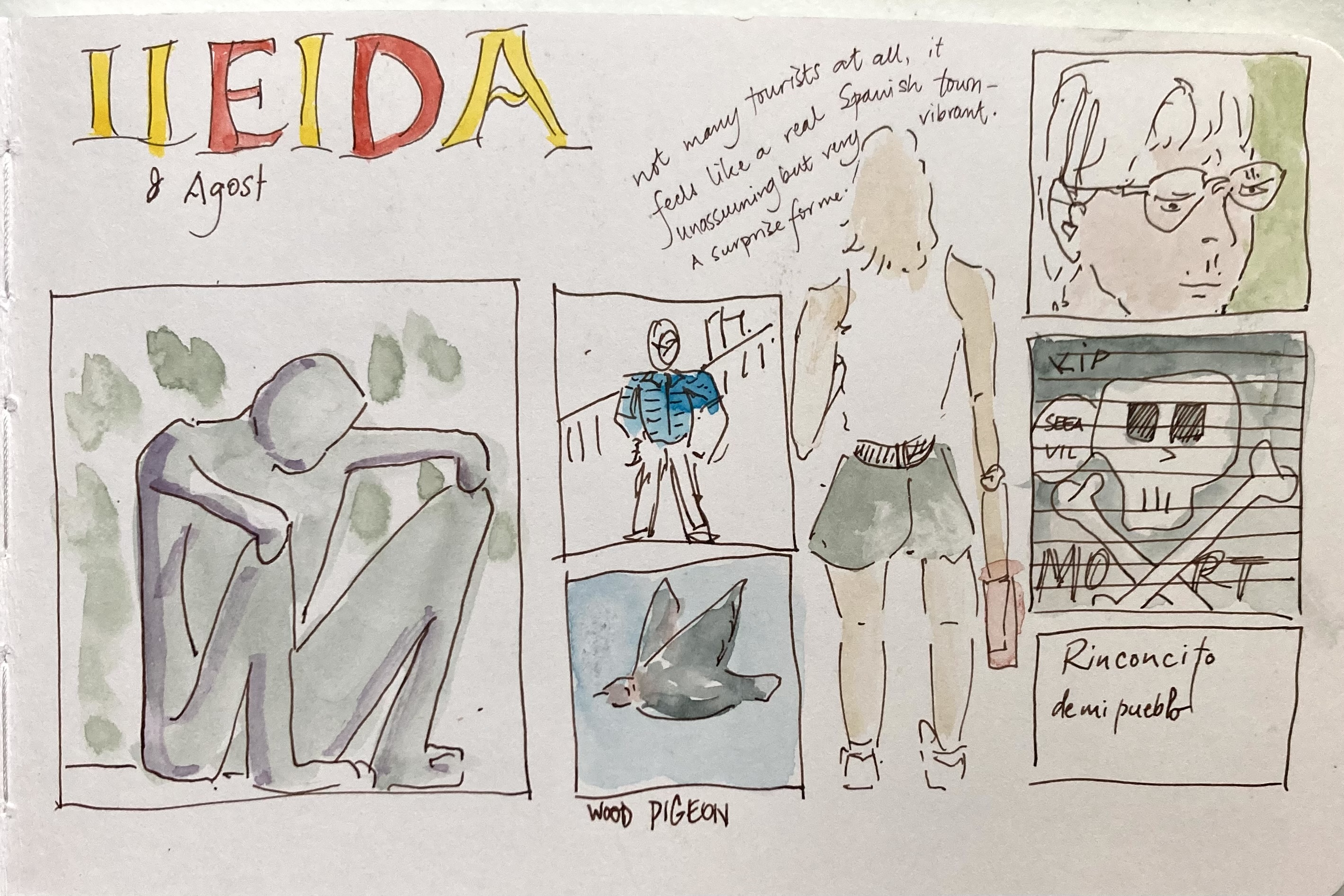 We moved from Girona to Lleida, which is in the western part of Catalunya close to the Pyrenees. We’d had a very positive review of this unassuming city from our friends in Girona, and approaching the city on the train moving through orchards, with a strong Central Valley vibe, we felt very at home.
What I really noticed almost as soon as we arrived was how real the city seemed. Very few tourists — we really stood out — and the lift to the upper levels of the city was being used for inhabitants to navigate their daily lives, rather than for tourists to get up to the cathedral. The city was besieged and bombed heavily in the civil war (1936-39) with the result that the post-war buildings spread out around the central hill and into the ag lands beyond.
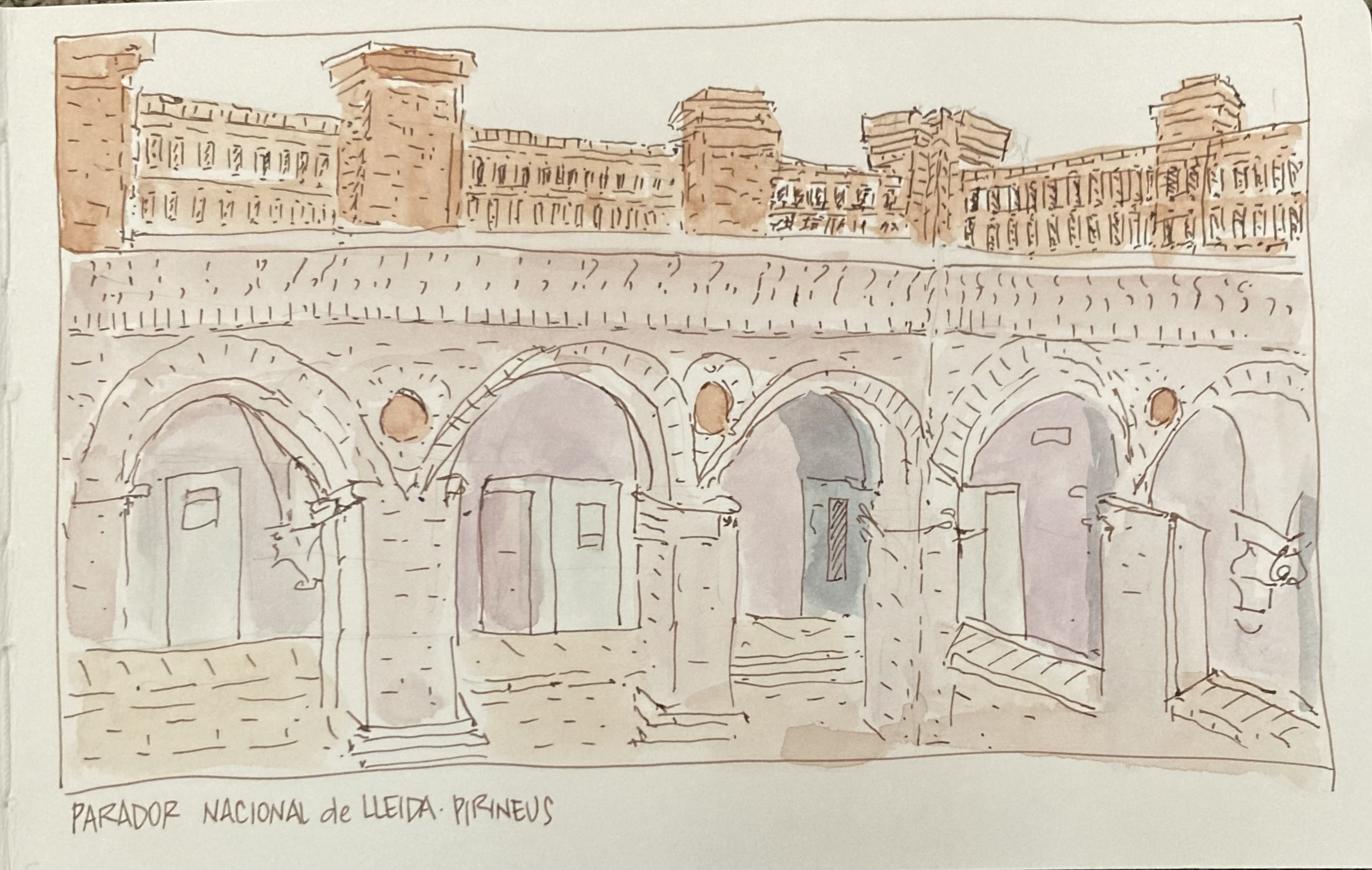
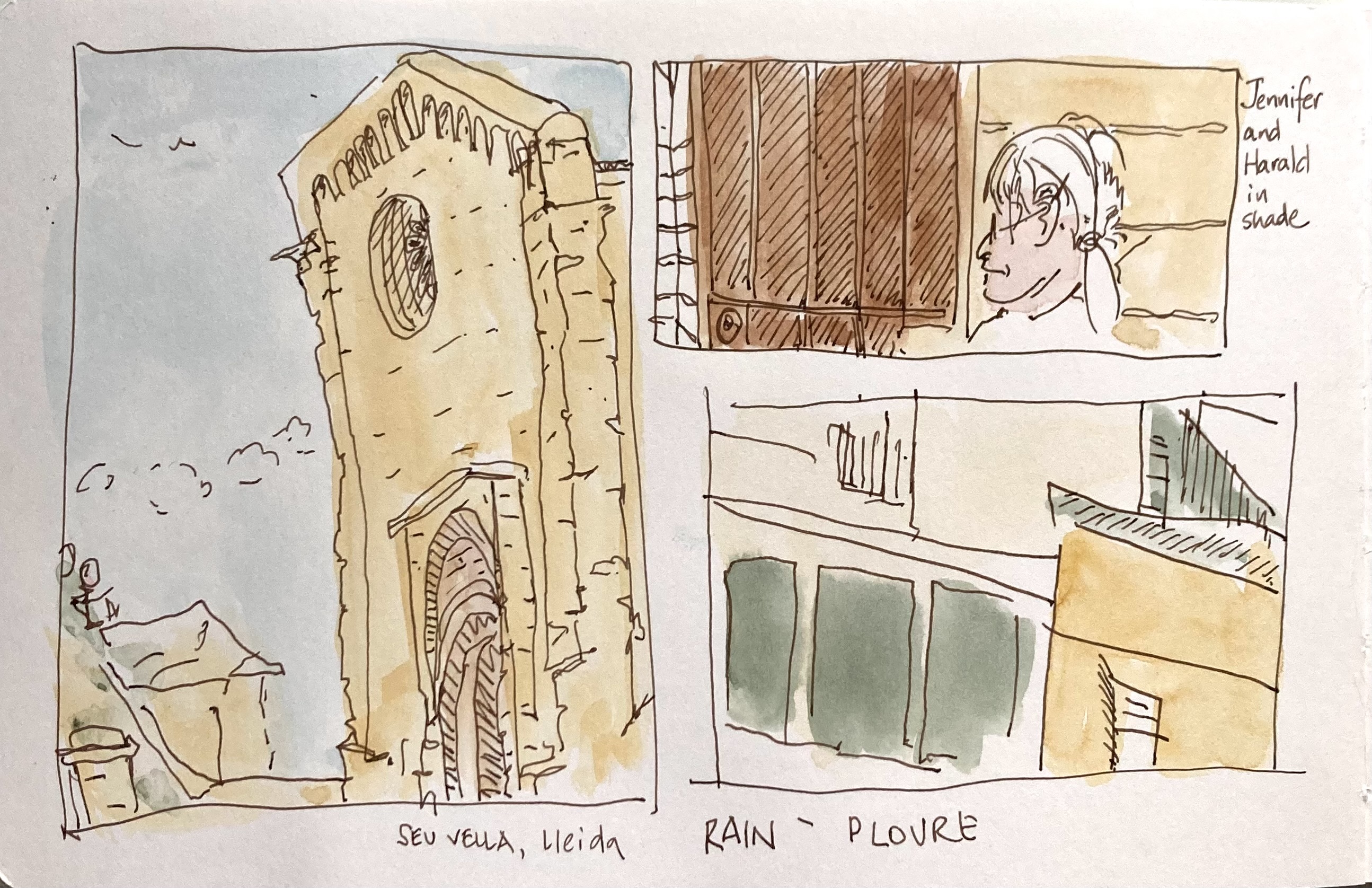 We met some friends in Lleida who live in Sweden but with whom I’d grown up in Madrid. We stayed in a parador, which was a converted convent in the upper level of the town. It was a spectacular setting and for Jennifer and myself a sweetly nostalgic experience. (Jennifer and Harald were given a room with a kettle and we weren’t, with the result that she snuck upstairs in her pyjamas leaving me a thermos of tea outside the door, which was very gratefully received.)
21 August 26
El Call de Girona
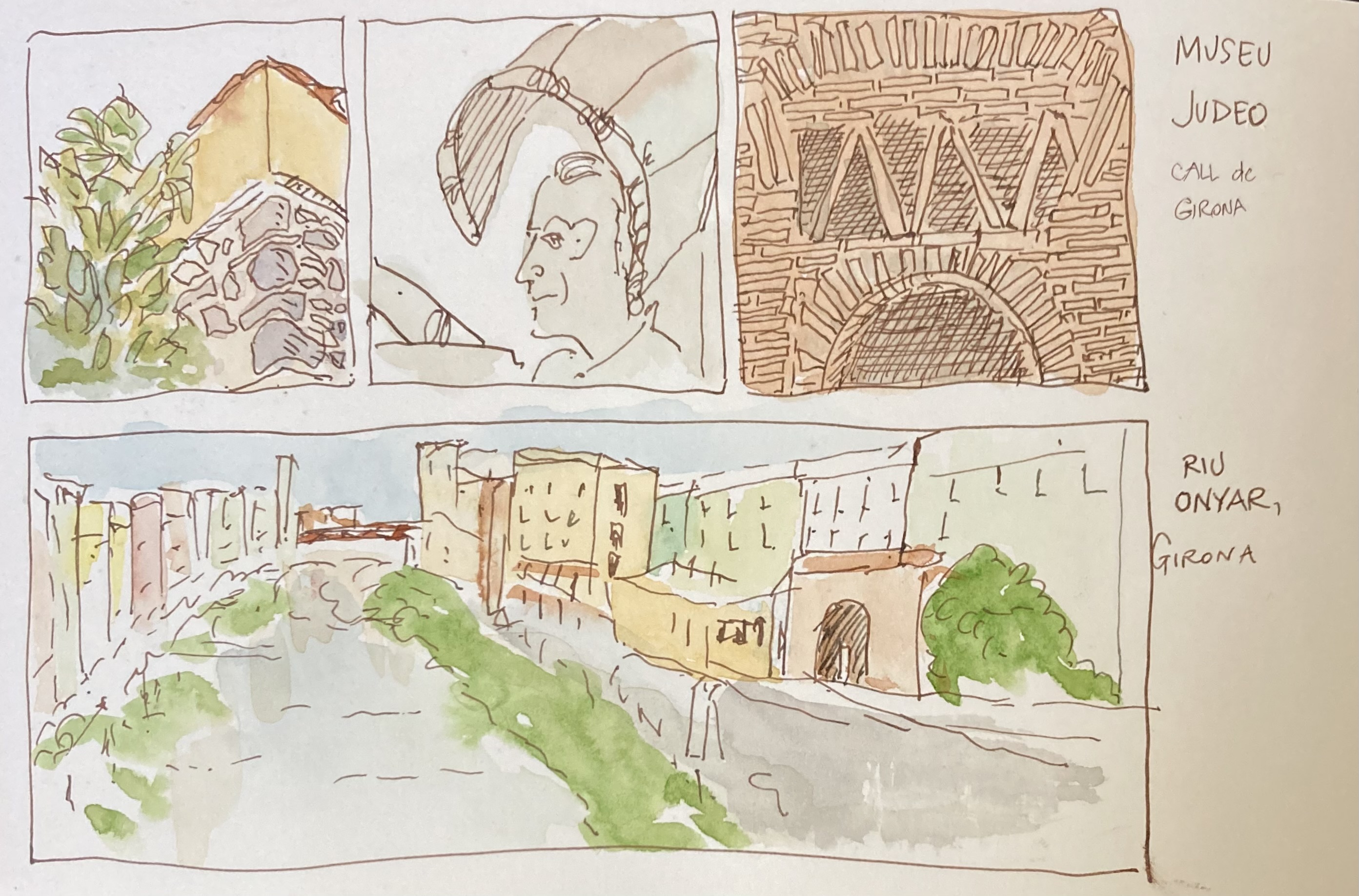
 A highlight of our sojourn in Girona was visiting the medieval Jewish quarter in the old part of the city, which is known as El Call. It is one of the best-preserved medieval Jewish quarters in Europe. Girona was a thriving center of Jewish scholarship; most notably the 13th century scholar Nahmanides lived in Girona most of his life before emigrating to the Holy Land where he established a synagogue in Jerusalem.
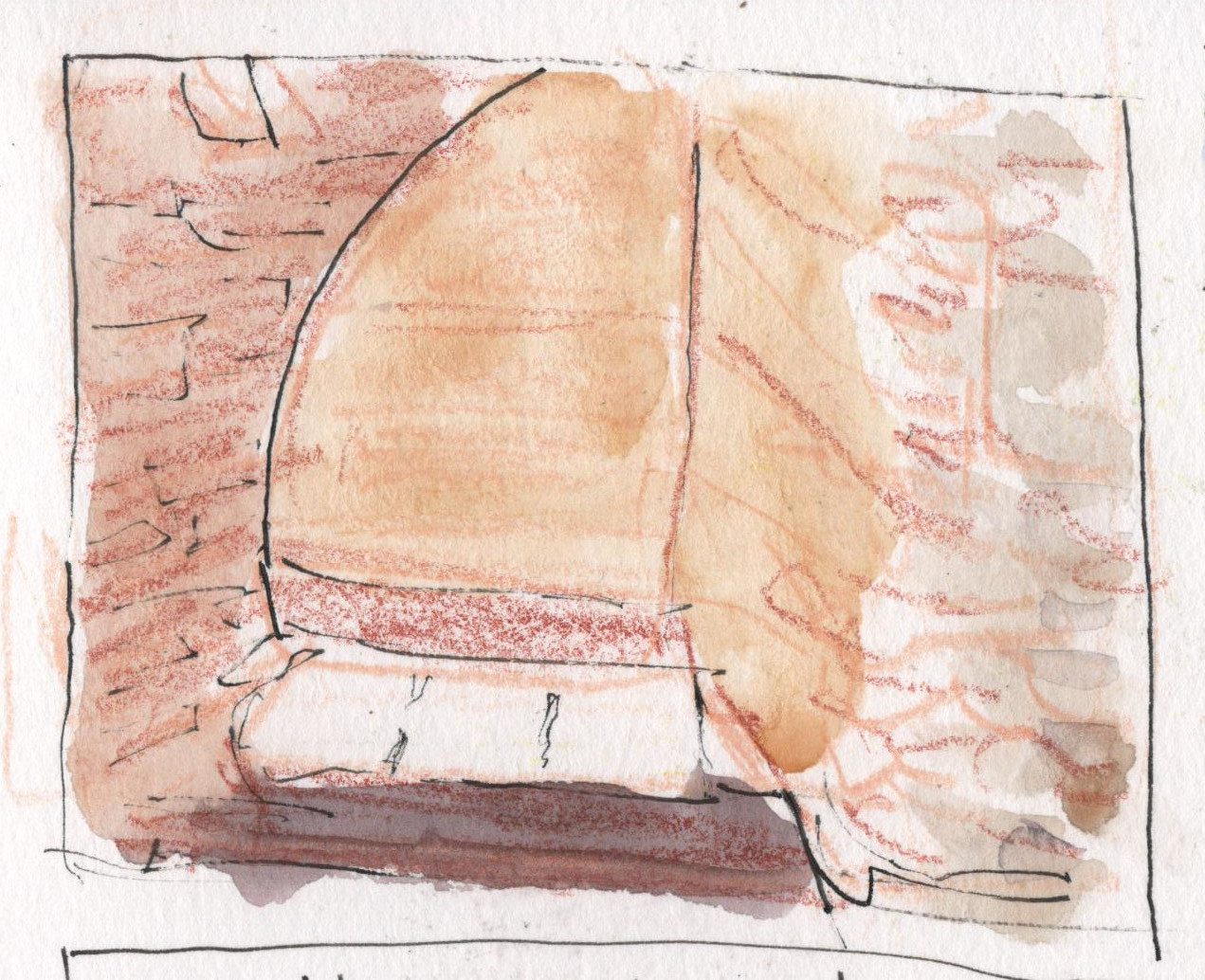
We went to the Museum of Jewish History which is housed in a building at the edge of the call. It contains lots of artifacts that were excavated nearby as well as a series of tombstones with inscriptions in Hebrew from a cemetery a couple of kilometers to the north. The museum also contains an excavated mikvah (Jewish ritual bath) from the 15th century that was unveiled to public view in 2014. I’ve illustrated the mikvah at left.
Together with the University of Girona, the museum also hosts the Nahmanides Institute for Jewish Studies, which organizes research and educational activities on Jewish culture both in the Girona area and far beyond, including a long-running lecture series. We did not investigate any of the institute’s activities though.
20 August 26
Girona
After a one-night stop in Barcelona, we moved up toward the Pyrenees to spend three nights in Girona. This is a city on a hill first lived in by Iberians then, like so many settlements in Catalunya, by a succession of Romans, Visigoths, Moors, and finally Christians, the Reconquista of Spain starting in the northwest and spreading south over the course of decades until the capitulation of the Caliphate in Granada in 1492. Much of the successive buildings are intact, and walking up the hill to the cathedral we saw a lot of offices with stone walls in the background, several centuries old, selling insurance or real estate or fans. (Or football shirts.)
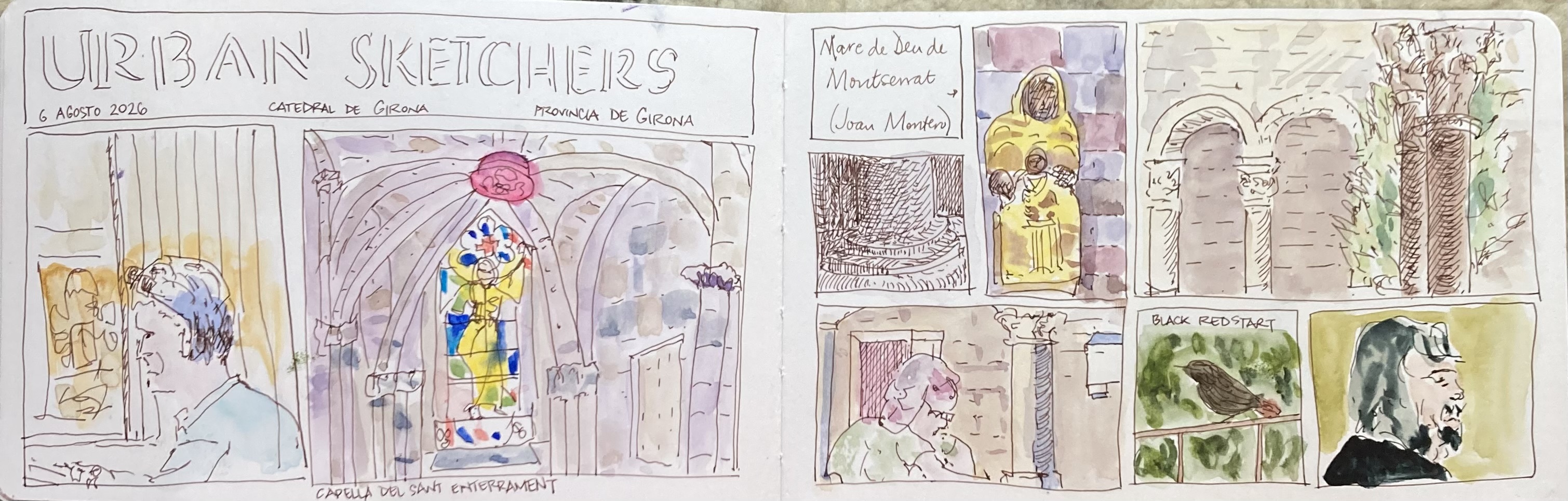
Our trip coincided with the weekly meeting of the Girona Urban Sketchers in the cathedral at the top of the hill. The cathedral’s construction was halted for some time by the arrival of the Black Death, with the result that it ended up being the second widest nave in the world by the time it was finished (after St. Peter’s in Rome). It also never received its second spire. We spent a lovely few hours sketching in and around the cathedral and cloisters.
 Girona has the reputation of being very expensive. It is now a major cycling hub, since many professional cyclists on the grand tour circuit like to train in the mountains; many of the better paid cyclists can afford to live here. A constant refrain throughout our trip was the bemoaning of housing prices that have been driven up by foreigners, many from northern Europe, who earn more than the locals and are having a deleterious effect on prices (and, of course, dilution of the Catalan culture, about which Gironans are especially proud). The Catalan government is very eager to promote Catalan language learning. Another modern office set in a house that was centuries old was a language school, with a request for volunteers to help teach their language.
19 August 26
Football In The Plaza
We arrived in Spain just two weeks after the country had won the World Cup. One of the threads we mused upon during the tournament is why it will be generations before the United States men’s team wins the World Cup. This felt evident during the loss of the United States team to Belgium, where the US simply did not have the ball control skills to beat a mid-tier European side. If they had somehow managed to win that match, they would have next met and surely lost to Spain in the quarterfinals, a team whose ball control skills overshadows everyone else’s. The point is that ball handling skills are picked up early on in children’s play, and the culture in the United States simply doesn’t engender this.
In Tivissa we stayed with friends whom we met in 2024 when the family came to Davis and rented the house two doors down from ours because the mother had a postdoc at the university here. They have three children: the two boys are now 12 and 13, and the girl is now 6. While staying in Davis the boys were active in youth sports, both in soccer through the Davis Legacy soccer club and in little league baseball. The soccer coaches in Davis all wanted the middle-aged boy to play on their team, because he scored lots of goals.
We got to witness the kids playing street soccer in Tivissa; in the evenings they would troop on down unsupervised to the plaza next to the church part of which dated back to the 13th century and kick the ball around, attempting to score goals against the wall of the church, the oldest boy in the family being the goalkeeper. There were 6 to 8 kids in total, ages maybe 10 to 13, including a couple of girls, one of whom was a long jump champion across Catalunya for her age group.
I felt like an anthropologist watching these kids. First, because this sort of unsupervised play is not something one has seen in the United States for a couple of generations, though this is facilitated by the small size of Tivissa — it is a village of 1700 people. (We’ve mentioned watching the television show El Foraster about village life in Catalunya before; Tivissa has in fact featured in an episode of this show.) More germane from the sports culture point of view, there is a direct line from this sort of street play by the kids to the dominance of Spain in global soccer, both men’s and women’s sides. The winner of the best young player award at this year’s World Cup, the center-back Pau Cubarsí, now 19, grew up in a village in Girona province in Catalunya of less than 200 people. Learning to kick a ball around is simply what kids do in Catalunya.
18 August 26
A Trip to Catalunya
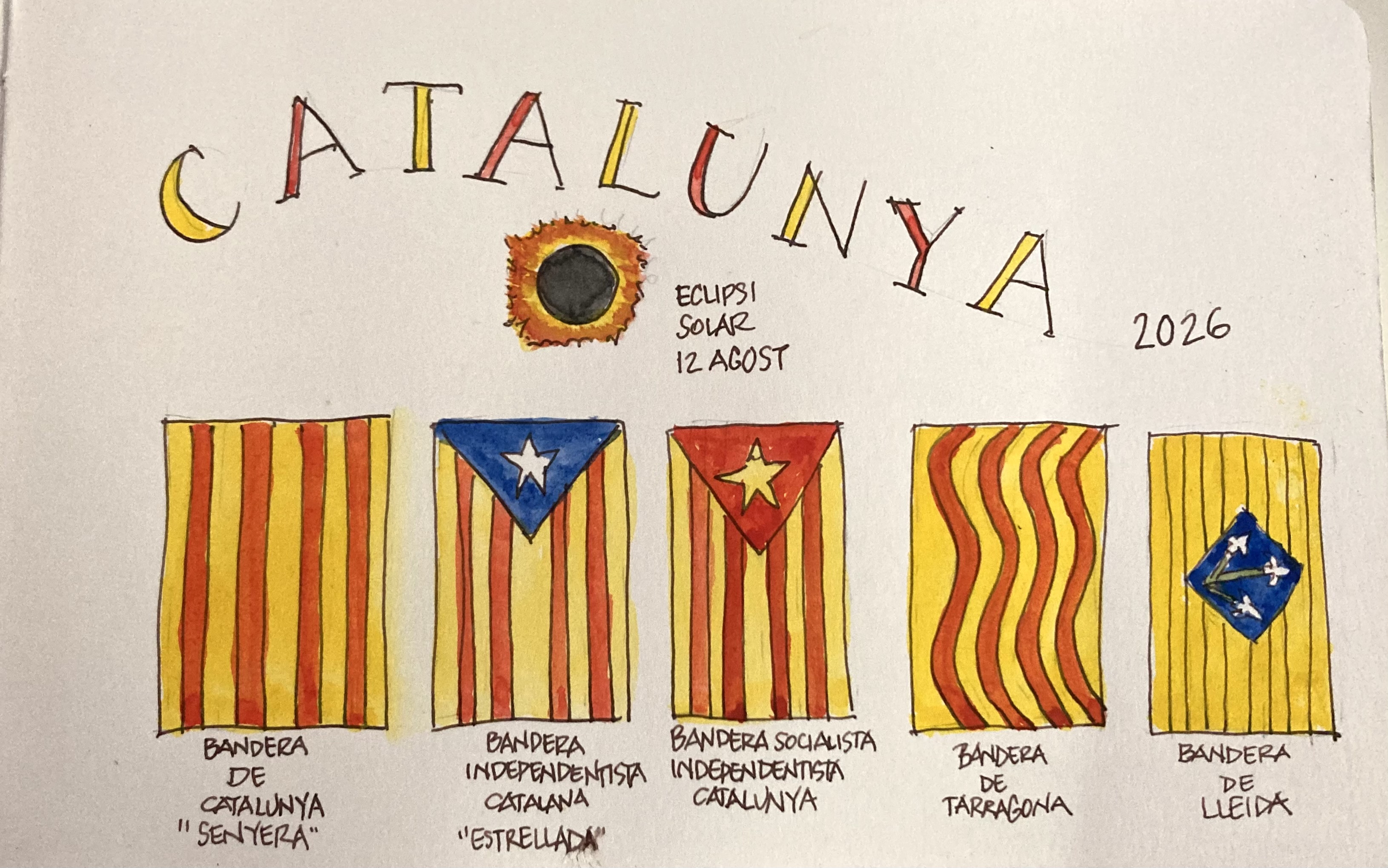
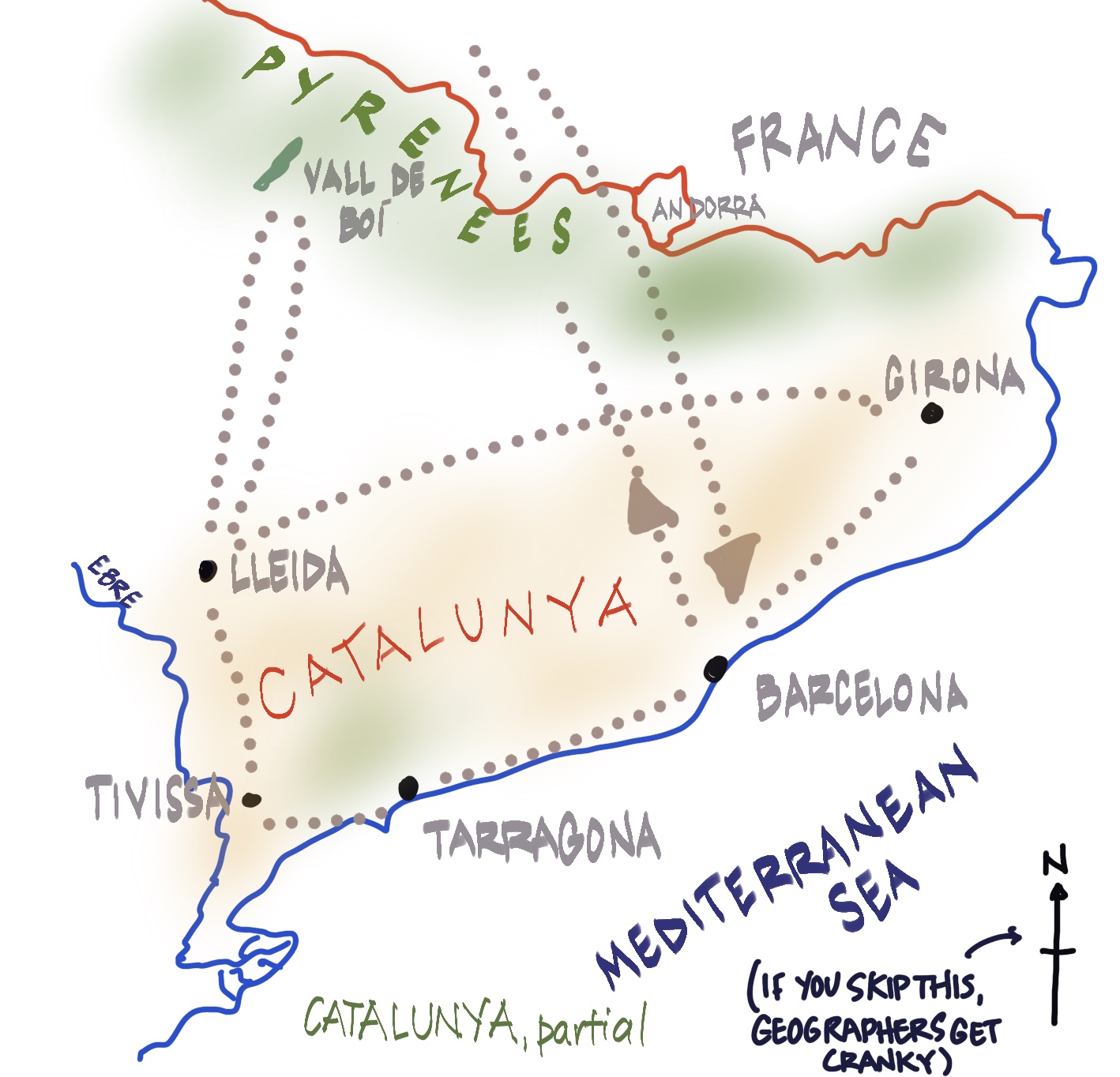 We returned late last night from a trip to Catalunya, an autonomous region in northeast Spain. We flew in and out of Barcelona, went north to Girona where we saw some friends and met up with an avid Urban Sketching group, met up with childhood friends in Lleida where we stayed in a converted convent and from where we ventured into the Vall de Boí in the Pyrenees, went south to Tivissa where we saw some Catalonian friends from Davis and the solar eclipse, rounding out our trip with Tarragona (capital of Roman Spain, Hispania) and finally three nights in Barcelona.
We are tired and a bit out of sorts with the nine hour time difference but we’ll be posting quite a bit about this trip over the next few days. I will say at the outset that I’m glad I’ve been studying my Catalan: I found I was able to hold quite fluid conversations in Catalan! This is much easier because most Catalans speak fluent Castilian but once again I was met with pleasant surprise that I’d made the effort. We visited a Catalan language bookstore in Barcelona and I picked up a novel, a fun and well-illustrated Catalan coursebook, and Numenius picked up a copy of Pratchett’s Equal Rites in Catalan. We were busy. I got blisters.
29 July 26
Chaco Canyon Public Comment
I have started the practice of submitting public comments on contentious agency proposals, as I shared earlier with my comment on proposed changes by the Office of Management and Budget to the federal funding process . Yesterday I submitted another comment, this time on a plan by the Bureau of Land Management to revoke protections adopted during the Biden administration for a 10-mile buffer surrounding Chaco Culture National Historical Park in New Mexico. This plan would open this area to oil, gas, and mineral extraction. Here is a good overview of the controversy.
As I did with the OMB proposal, I am sharing the text of my comment below.
—-
I strongly oppose the proposed revocation of Public Land Order 7923, the public lands withdrawal surrounding Chaco Culture National Historical Park. This proposed revocation is described in the July 2026 BLM environmental assessment document DOI-BLM-NM-F010-2026-0002-EA, hereafter referred to as the BLM document.
The Chaco Canyon landscape is a UNESCO World Heritage Site. It has outstanding cultural and natural value to humanity as a whole. It is one of only 23 such sites in the United States. In 1972 the United States was the first to ratify the international treaty to preserve such sites for humanity. The Chaco Canyon cultural landscape extends well beyond the boundaries of the National Historical Park (NHP). It is a landscape sacred to the Pueblo peoples who live in the area. According to the BLM document, there are at least 145 traditional cultural properties including 9 great houses within the 10 mile buffer surrounding the NHP.
The BLM document itself states that “the Pueblo tribes view the Chacoan landscape as an integrated cultural system spanning northwest New Mexico and beyond, not a collection of isolated sites. They see its network of roads and interconnected communities as reflective of a society that thrived through regional connections rather than isolation…Maintaining this landscape is considered important by the Pueblo tribes for its cultural and historical integrity.” (Page 28).
The proposed revocation has been a travesty of public process. In April 2026 BLM opened a public scoping period for only seven days. This was entirely online with no in-person meetings. Despite the short window, BLM received over 100,000 comments, but Appendix E of the BLM document intentionally omits any summary of the content of these comments. The window to comment on the present BLM document is almost as short, only 14 days.
This dismissal of public input contrasts strikingly with the process that led to the issuance of PLO 7923 in 2023, which took a year-and-a-half with eight public meetings and a 120-day public comment period which elicited over 110,000 comments, all of which followed a decade of public engagement by Tribal groups such as the All Pueblo Council of Governors.
There is no justification in the BLM document for overturning this extended public process that led to the creation of PLO 7923, other than referring vaguely to the executive orders EO 14241 and SO 3418. By the analysis presented in the BLM document, the economic benefits of oil, gas, and mineral development within the NHP 10-mile buffer would be extremely modest. The analysis estimates that only 14 jobs would be created across the four county region over a twenty-year period.
But the BLM document fails to analyze possible economic losses to the region that might result from reduced visitation to Chaco Culture NHP as a result of destruction of the buffer lands. As an example, Chaco Culture NHP is renowned as a dark sky site for public astronomy. (See the Chaco Culture NHP webpage at https://www.nps.gov/chcu/planyourvisit/nightsky.htm.) The BLM document acknowledges (Appendix C, AIB-11) the potential for increased sky glow as a result of development of the buffer zone. Brighter skies means less reason for amateur astronomers to visit the NHP. More generally, the failure to study impacts to the recreational economy of the region as a result of buffer zone development is a substantial weakness of the BLM economic analysis.
The cultural landscape surrounding Chaco Canyon dating back at least 1200 years is a treasure for all Americans. Any development in the vicinity would irrevocably disrupt the integrity of the landscape, all for a few dollars worth of energy resources seized in an unethical affront to the public engagement process. I urge BLM to keep Public Land Order 7923 as it stands.
25 July 26
Boxcars
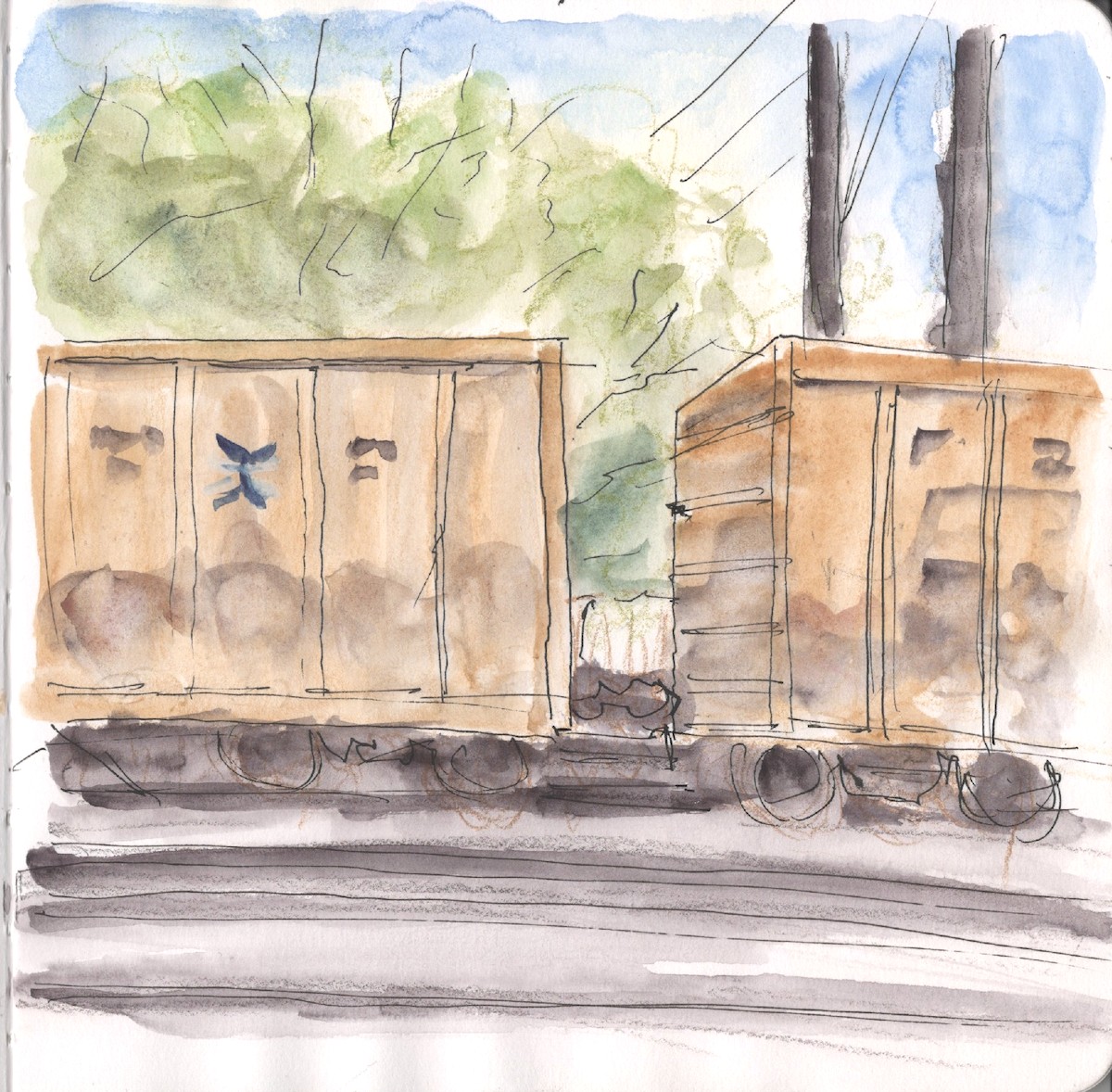 . There is a line of the California Northern Railroad that runs north-south behind the Davis Food Co-op near our house. I often like photographing the freight cars that are parked on this line. For my urban sketch today I drew two of the boxcars linked together and parked near the food co-op.
21 July 26
The Old Church
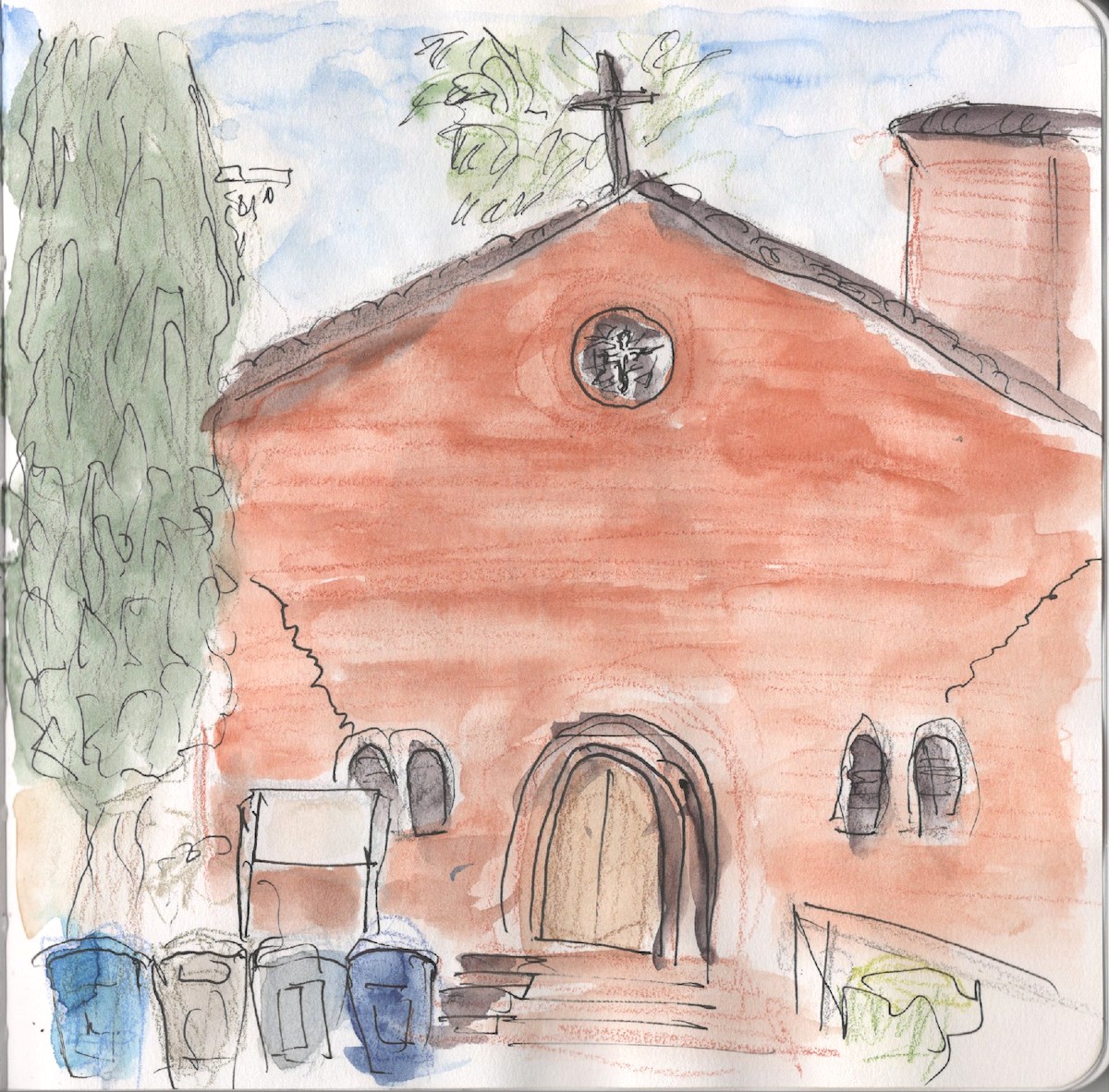 I didn’t get a chance to do my urban sketch on Sunday until after the World Cup final. It was hot and I did not want to wander too far so I sketched the old Newman Catholic Center church at C and 5th. This church was declared structurally unsafe a few years ago and is unused; the congregants meet in newer buildings on the same grounds.
It was advantageous to sketch the church in the late afternoon because I had shade while I was sitting on my stool in a parking lot across the street. I think this is my favorite sketch I’ve done of the church.
17 July 26
(Not) Sharing The Grapes
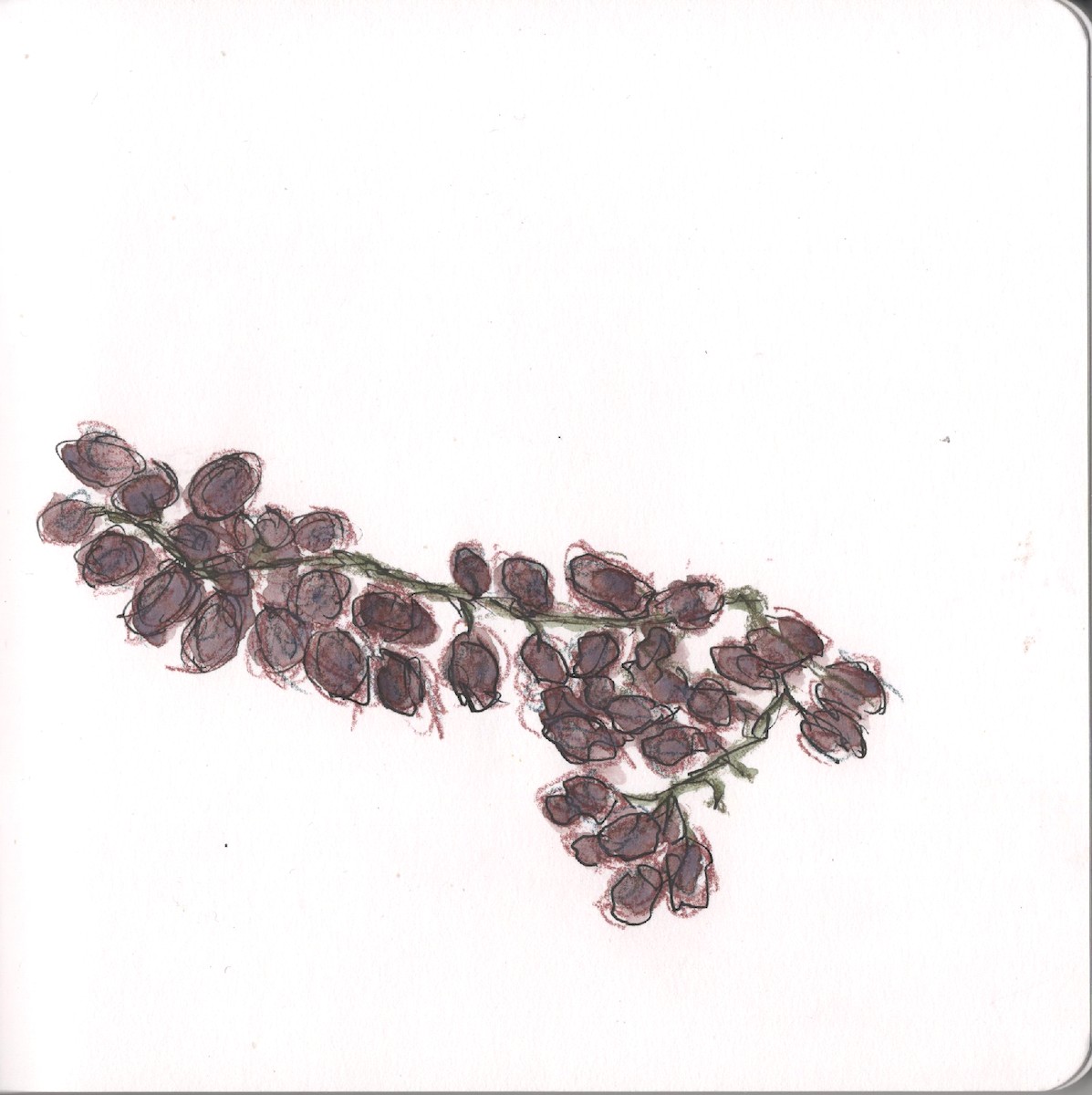 Grapevines overhang the path on the south side of the house, and Pica today noticed a rat raiding the grapes outside the kitchen window. This was not to be allowed, so I collected a grape bunch and later drew it as my sketch of the day.
11 July 26
On Local Fandom
We have eight days left in the World Cup, and already I am wondering about being bereft of football once it ends. What will I follow to get my footie fix? The end of summer is when professional clubs in many leagues start their season again — should I adopt a club? I did try that after the 2010 World Cup and started casually following Tottenham Hotspur. At the time they were consistently a 5th or 6th place side in the Premier League; since then they’ve gone through many managers (including Mauricio Pochettino, whose future as head coach of the U.S. Men’s National Team is under debate right now) and just had their worst season in a long while, barely escaping relegation.
I am thinking now that trying to be a fan of a side in a top-flight far-off league is just not a good strategy. I don’t have attachments to the places where these sides are located. (Our Davis sketching buddy Pete Scully is a huge Tottenham fan, but that is because he grew up in North London.) What if I find a local team to support? Looking into this matter has just led me into all the swirling discussion and debate over the future of soccer in the United States.
The first team that came to mind was Sacramento Republic FC. They have been around since 2012. I mention this to Pica; she says something about being interested in women’s footie. Well, there’s Bay FC, which was founded in 2023 and plays in the National Women’s Soccer League, the top women’s league in the country. But their stadium is in San Jose, which is too far for me to consider it local. (The identical logic applies to the MLS (Major League Soccer) team the San Jose Earthquakes who play in the same stadium).
I then discover the California Storm. How did I not know about the California Storm? They are an amateur women’s team that play in the Women’s Premier Soccer League. The WPSL was founded in 1998 and is the largest women’s soccer league in the world, with 150 or so teams in it. The California Storm are the winningest team in the league both in terms of number of championships and overall win-loss record. They are based in Davis, California.
But they are not the only WPSL side in Davis. There is also FC Davis. FC Davis is a semi-pro soccer club in Davis founded in 2017 with both men’s and women’s sides. Their founder in 2018 posted a fascinating account of FC Davis came to be. From its introduction:
“Start-up soccer” is a concept gaining momentum around the country as a growing number of communities are looking to break from the current mold of US Soccer and build a more intimate and organic soccer experience in their hometowns.
Due to the constraints of the US soccer pyramid (no promotion/relegation), you don’t start a semi-pro team for money or notoriety. You do it to create a vehicle for helping thousands of players in your community and to provide soccer crazy fans in your local area a team they can call their own.
The article is extremely critical of MLS and its closed system without promotion/relegation. MLS teams only exist where billionaires decide the market is big enough for them.
(Sidenote: Pete Scully has a couple of nicely illustrated blog posts about FC Davis.)
Returning to Sac Republic FC, it turns out they sit at the cusp of the debate over what direction soccer in the United States will go. They play in the USL (United Soccer League) where they have been since they were founded. The intention was that they would build a fan base and join the MLS as an expansion team. This almost came to fruition with Sac Republic FC signing an agreement to join MLS in October 2019, but 16 months later their main investor gets cold feet during the middle of the pandemic and pulls out of the agreement.
But this hasn’t deterred Sac Republic FC from continuing to build their team. They are constructing a new stadium close to downtown, and in November 2024 the Wilton Rancheria located in southern Sacramento County became the majority owner of the team, becoming the first Native American Nation to hold a majority interest in a men’s pro sports team. Meanwhile USL has their own expansion plans, and intends to start a three-tiered promotion/relegation system in 2027.
I very much like the notion of organic bottom-up growth of local teams and regional competition, which is how fandom works across most of the world. Teams remained tied to their community. To take an English example, it is virtually impossible to imagine the Bolton Wanderers up and leaving for Sheffield because they got a better stadium deal there. Relocations happen with major sports franchises in the United States with regularity, which as an East Bay native is something I am bitter about. Oakland no longer has a top-tier professional sports team, with the Oakland Raiders (football) leaving in 2019 and the Oakland Athletics (baseball) leaving in 2024. But they now have a USL team, the Oakland Roots, founded in 2018. The Oakland Roots play Sac Republic FC regularly.
—
Addendum. We watched the England-Norway match today over at the Upper Crust Bakery together with a pretty large crowd. Seated in front of us was an older gentleman wearing an Oakland Roots t-shirt.