
12 October 25
Fruit Bowl
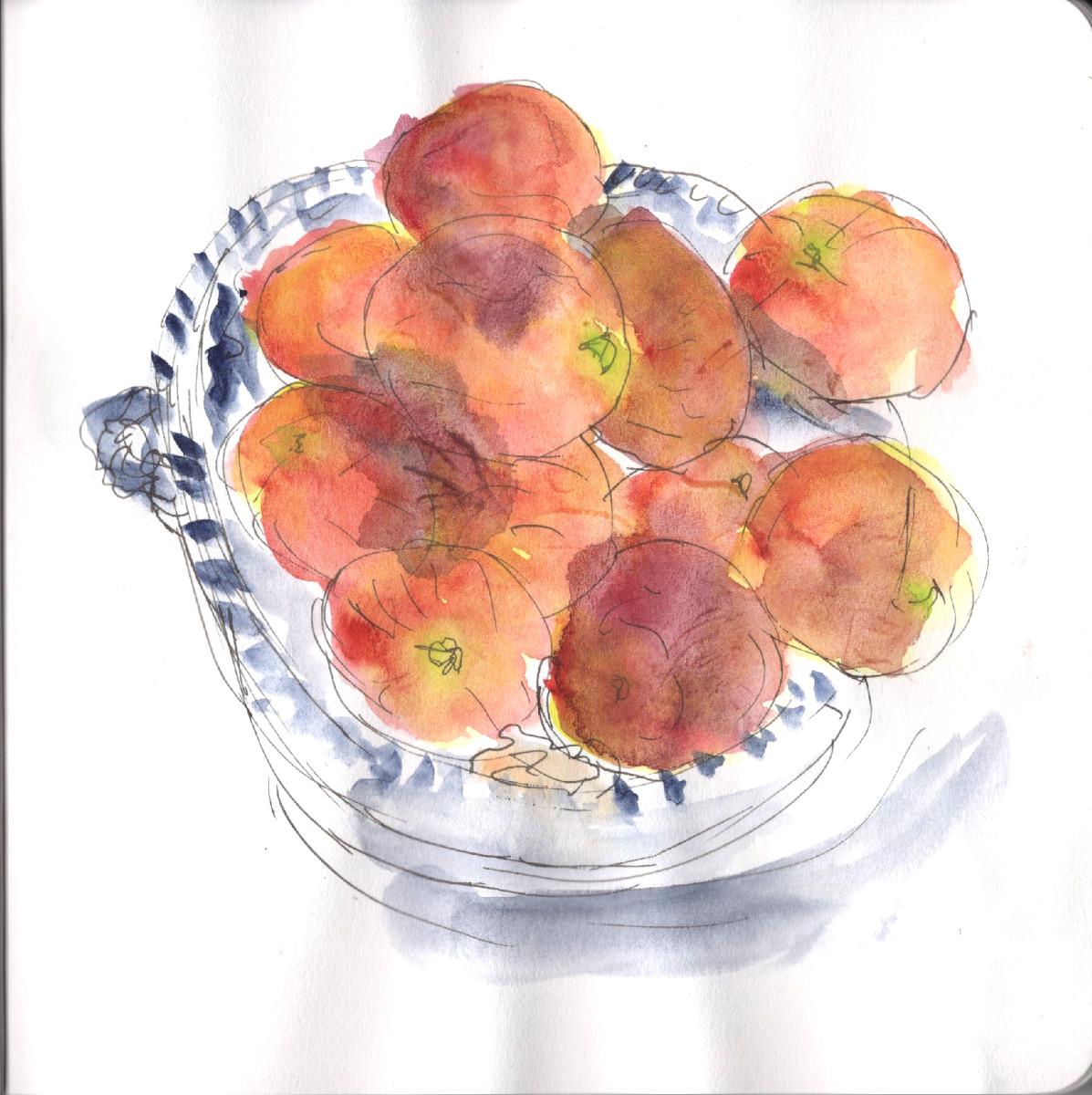 We have a complete set of 24 of the Derwent Inktense paint pans, and I have been testing them out a bit. Here is a sketch of some apples in a fruit bowl using the Inktense pan colors.
9 October 25
Zettelkastening Comics
I was interested to read Numenius’ blog post from yesterday. I am drawn to movable pieces, whether written or drawn, and wonder how this might help in construction of a comic.
An important feature of a comic is that there be sequential panels, whether or not anything is written on them. But the number of panels, their size relative to each other, and even where they appear (cliffhangers work better if positioned at the bottom right hand of a recto page, at least in Western traditions, for instance), can all be worked through if ideas and panels are assembled as movable pieces.
I have a lot of index cards and at least three projects currently in the works on cards, held together with rubber bands. None of them is very large which helps. But this is giving me a lot of ideas about how to work, specifically with how to structure thought.
6 October 25
Jazz Band
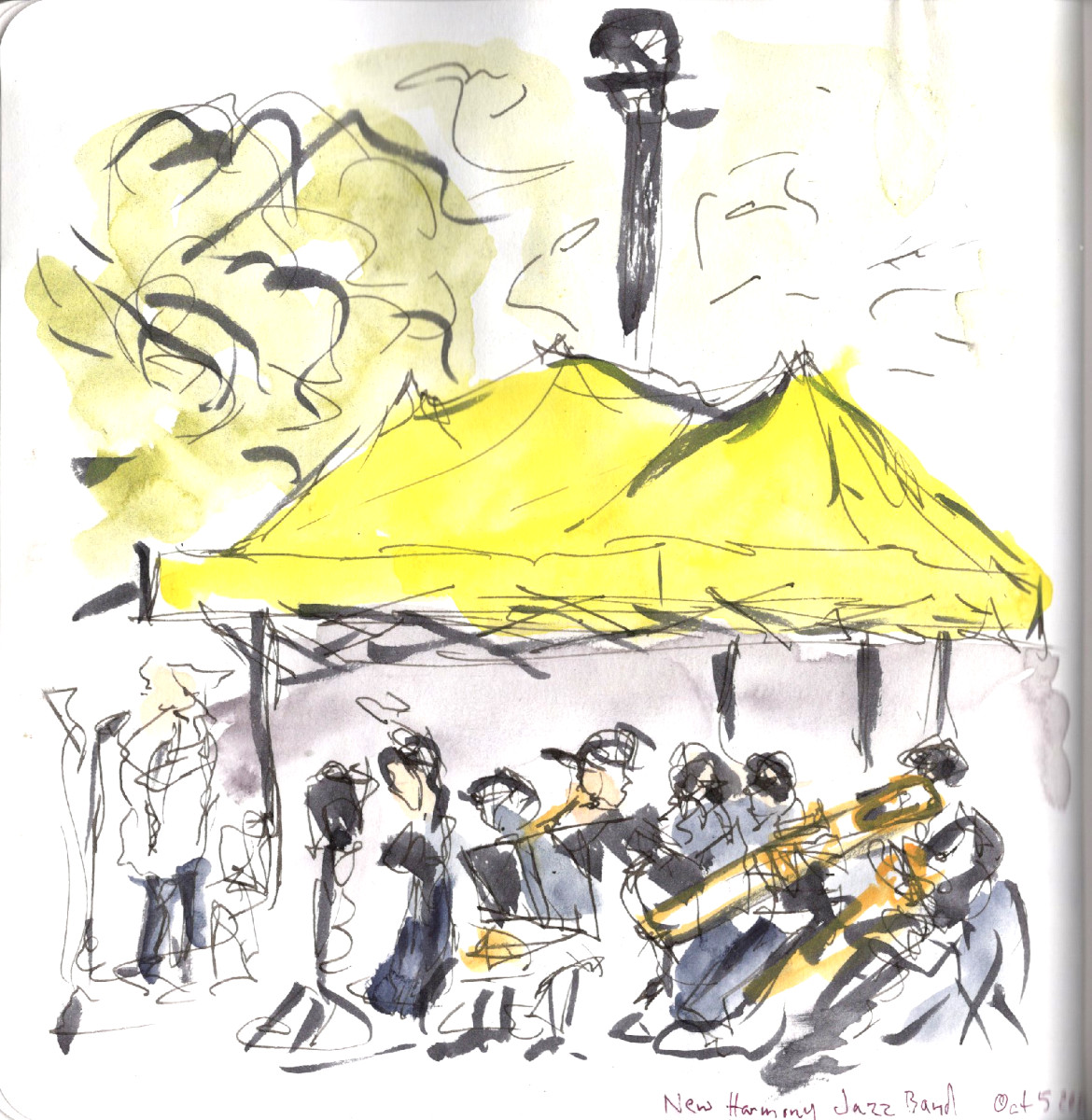 This is my urban sketch for this past Sunday. I went over to Central Park where the biweekly Davis Craft & Vintage Fair was taking place. The local New Harmony Jazz Band was playing at one end of the fair, as they often do.
I am getting used to sketching in this 7”×7” sketchbook. It’s a little bigger than what I’ve been sketching in previously, but this lets me be freer with the sketches. I like the combination of fountain pen fine line work with a gray Pentel brush for bolder ink strokes. I am still pleased with the Derwent line and wash kit. It was nice to have that bold Inktense yellow handy for the tent canopy. And I figured out how to mix skin tones with the paint pan set: I used a combination of poppy red with the mango Inktense colors.
25 September 25
Collective Revisiting
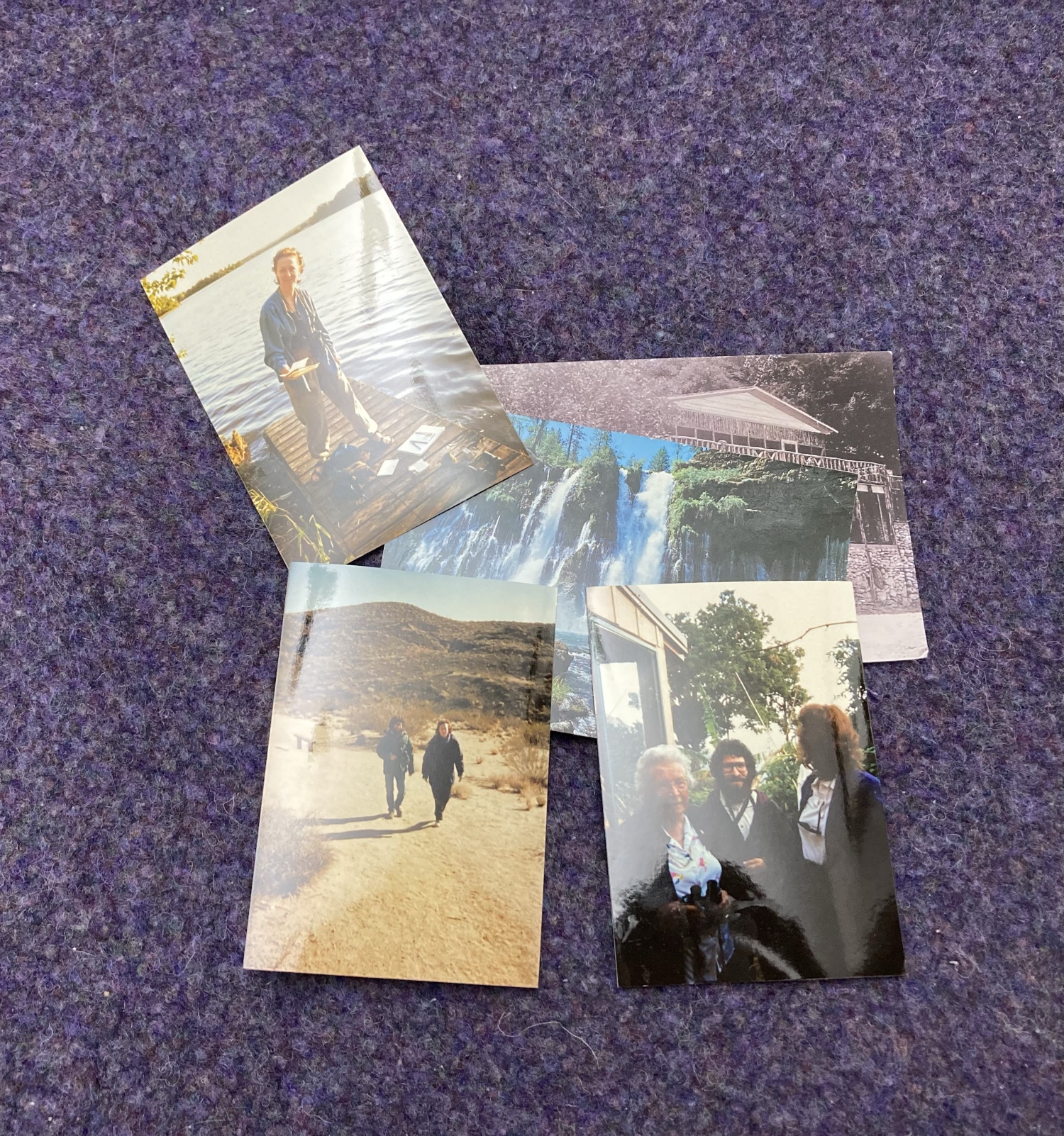 Looking through hundreds of old photos with three generations of family members is an interesting experience. Perspectives change, what’s important changes, so many details are now lost to history…But we had a great time this afternoon sorting through some of my mother’s photos. There are more to go, but for now we are savoring the time we have with her, mining her memory and adding ours.
The photos above are the prints I’m keeping so far. I already have a lot of photos of our camping trips and of my parents in Bodega Bay and Spain. In this age where digital photos are at the end of your thumb and a smartphone, the magic of seeing old prints was a joy. More anon.
21 September 25
Back From Boston
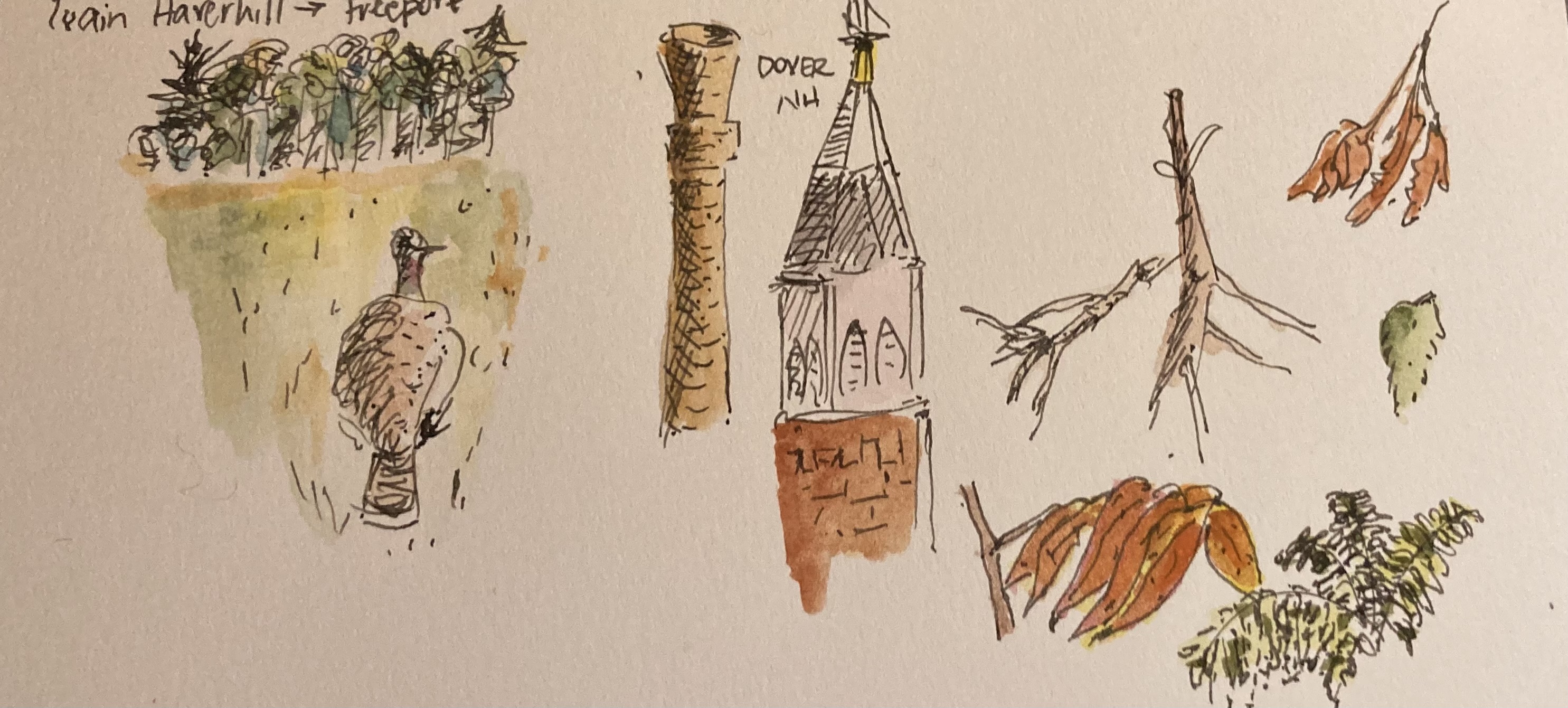
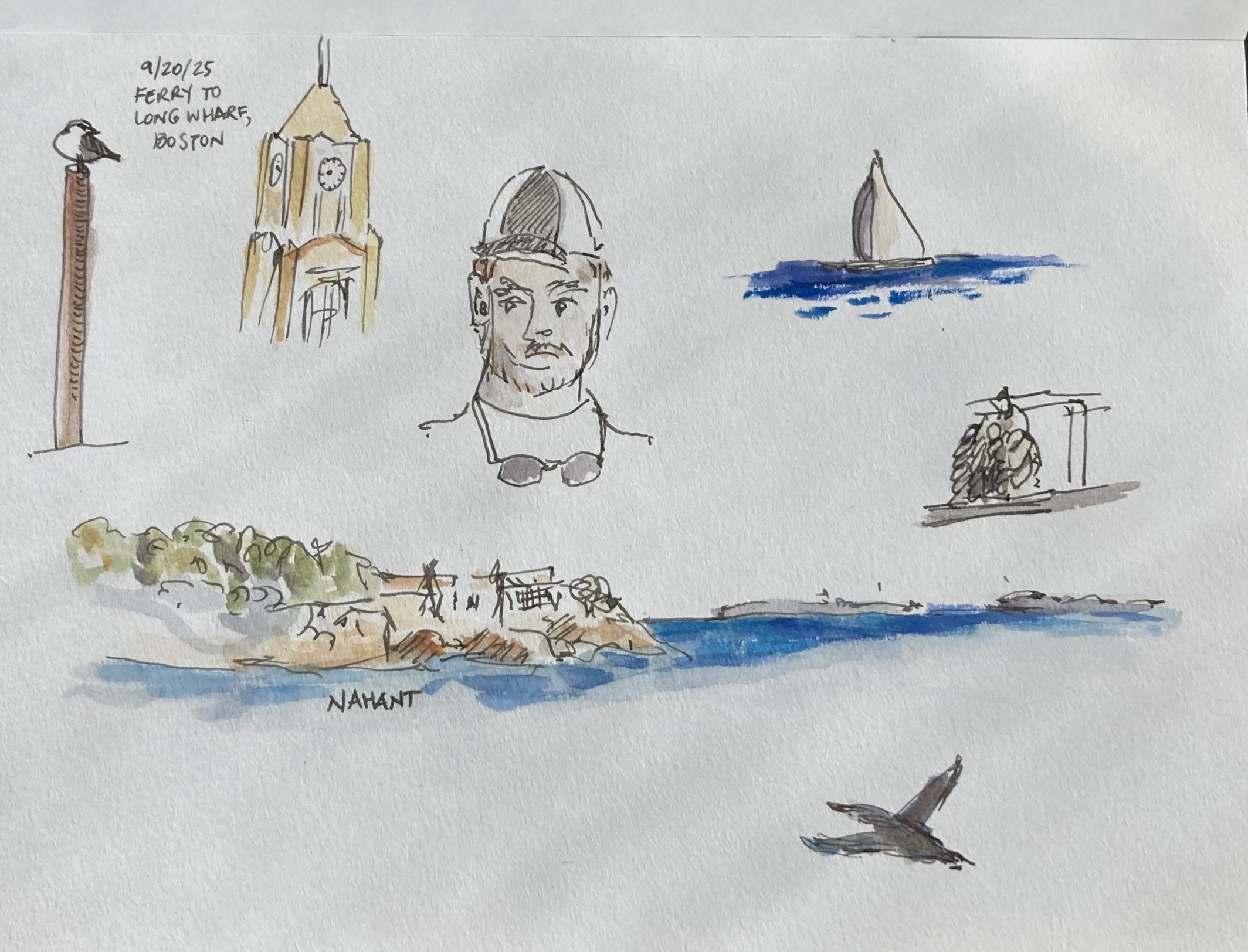 I came back this afternoon from my short Boston outing on the train. Yesterday I took a ferry trip with a friend from the North Shore to the North End, Boston’s original neighborhood whose ethnic identity has changed from settler to wealthy Bostonian to red light district to Irish to Italian, though I doubt that many or even half of the people who live there now are of Italian descent: it’s turned into boojie wealthy, though unwise to own a car if you live here.
This morning my friend Linda and I went birding on Plum Island, where we saw a lot of migrating songbirds (including some warblers I haven’t seen for a while). Batteries? recharged!
20 September 25
New Daily Sketchbook
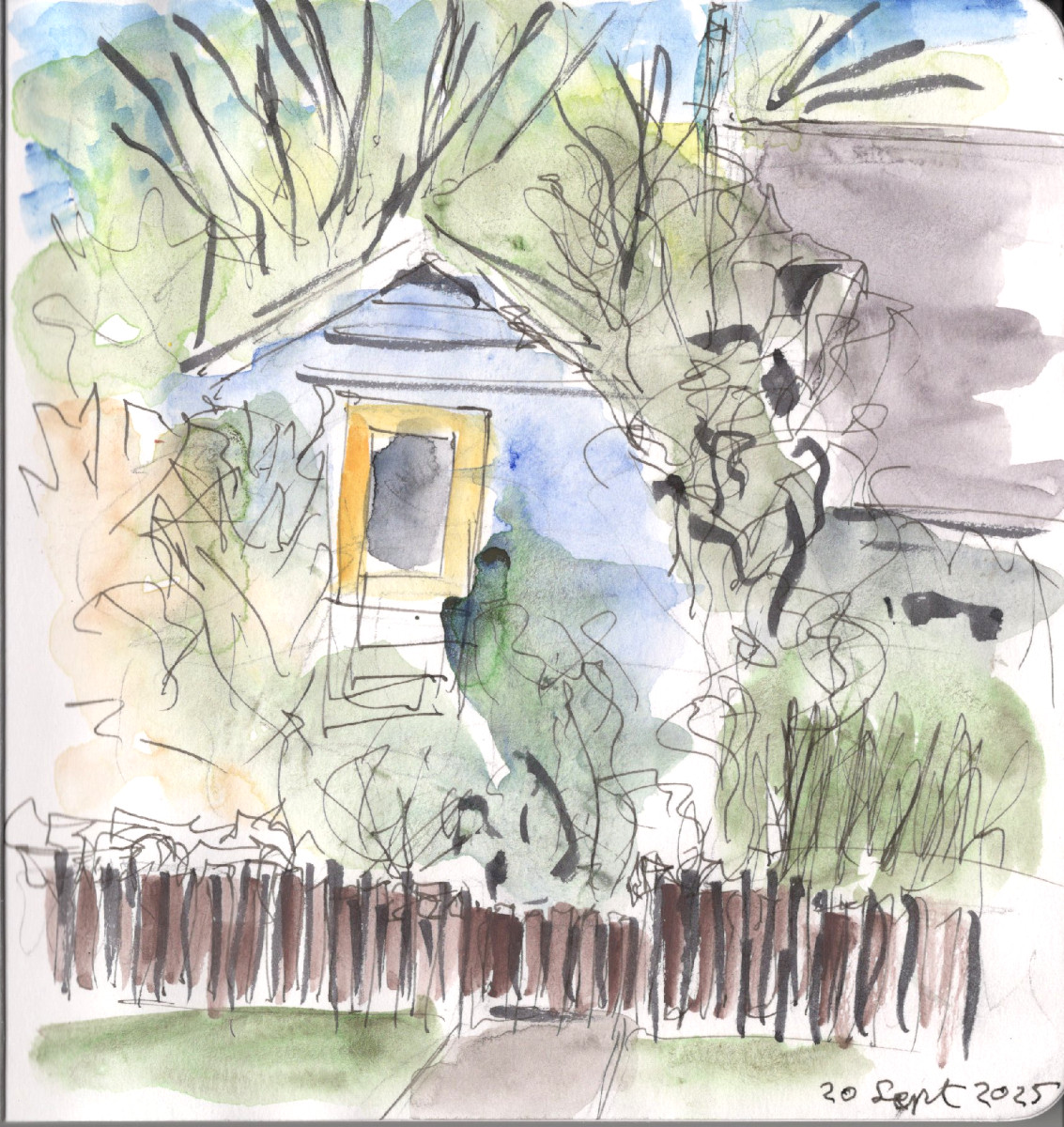 I started my new daily sketchbook today. For my weekend sketching outings using this sketchbook I’m going to be doing general urban sketching. Today’s sketch was of a house on G Street not far from the food coop.
My new sketchbook is a 7”×7” softcover Stillman and Birn Alpha sketchbook. My previous square sketchbooks were 5 1/2” × 5 1/2”, so there’s a bit more area to cover in each sketch. In today’s sketch I used my gray Pentel brush pen for accents; maybe I’ll be doing more of that in this sketchbook.
19 September 25
A Trip to Boston
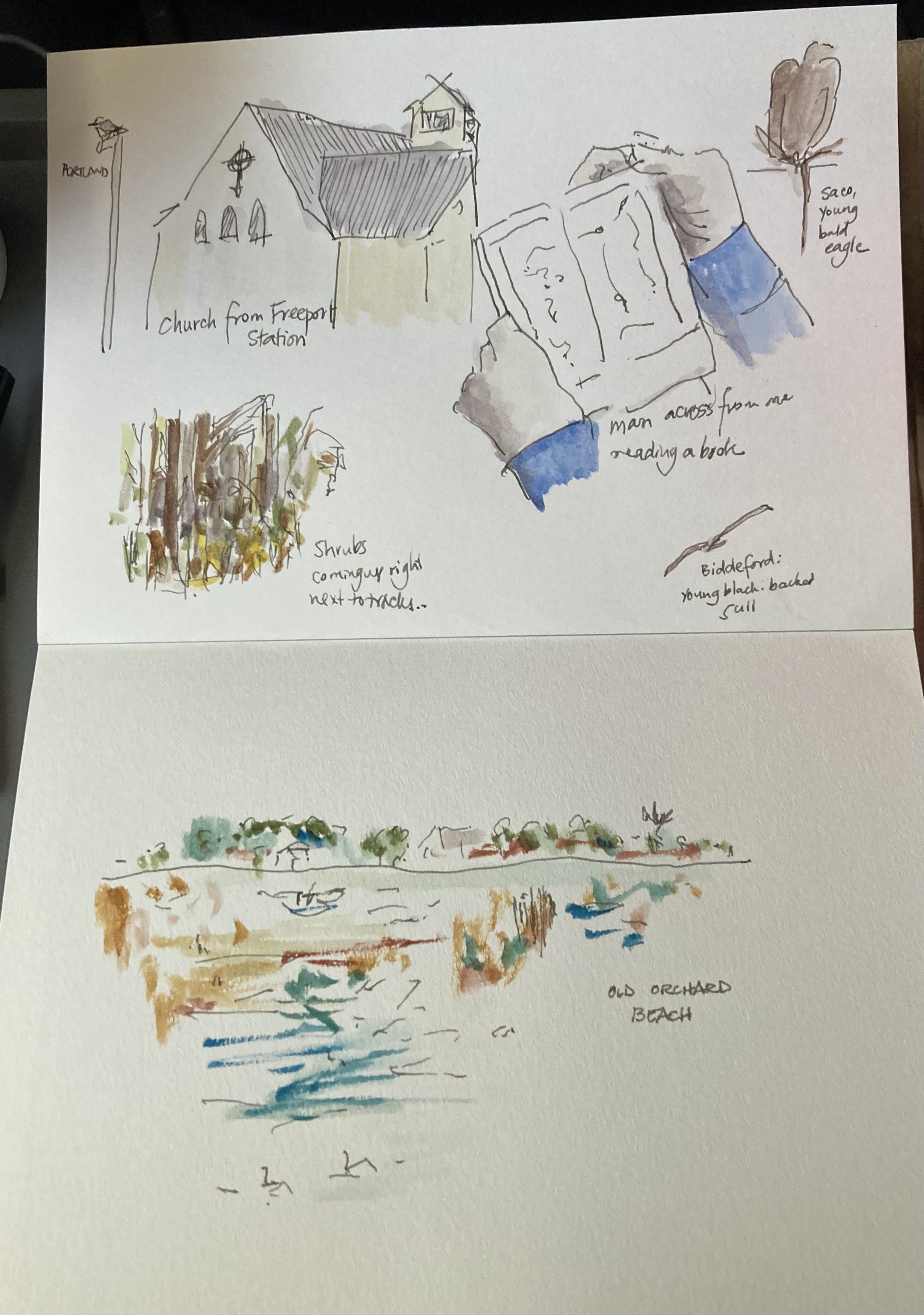 I lived in Boston for eight years before I moved to California. I’ve been back to the east coast many times over the past 30 years but rarely to Boston proper. Today I went south on the train and took myself to the Isabella Stewart Gardner museum and the Museum of Fine Arts where I found a lot of old friends and at the latter saw the astonishing Rachel Rausch exhibit. Recharged the batteries for sure, maybe at the cost of sore feet.
17 September 25
Dried Plants
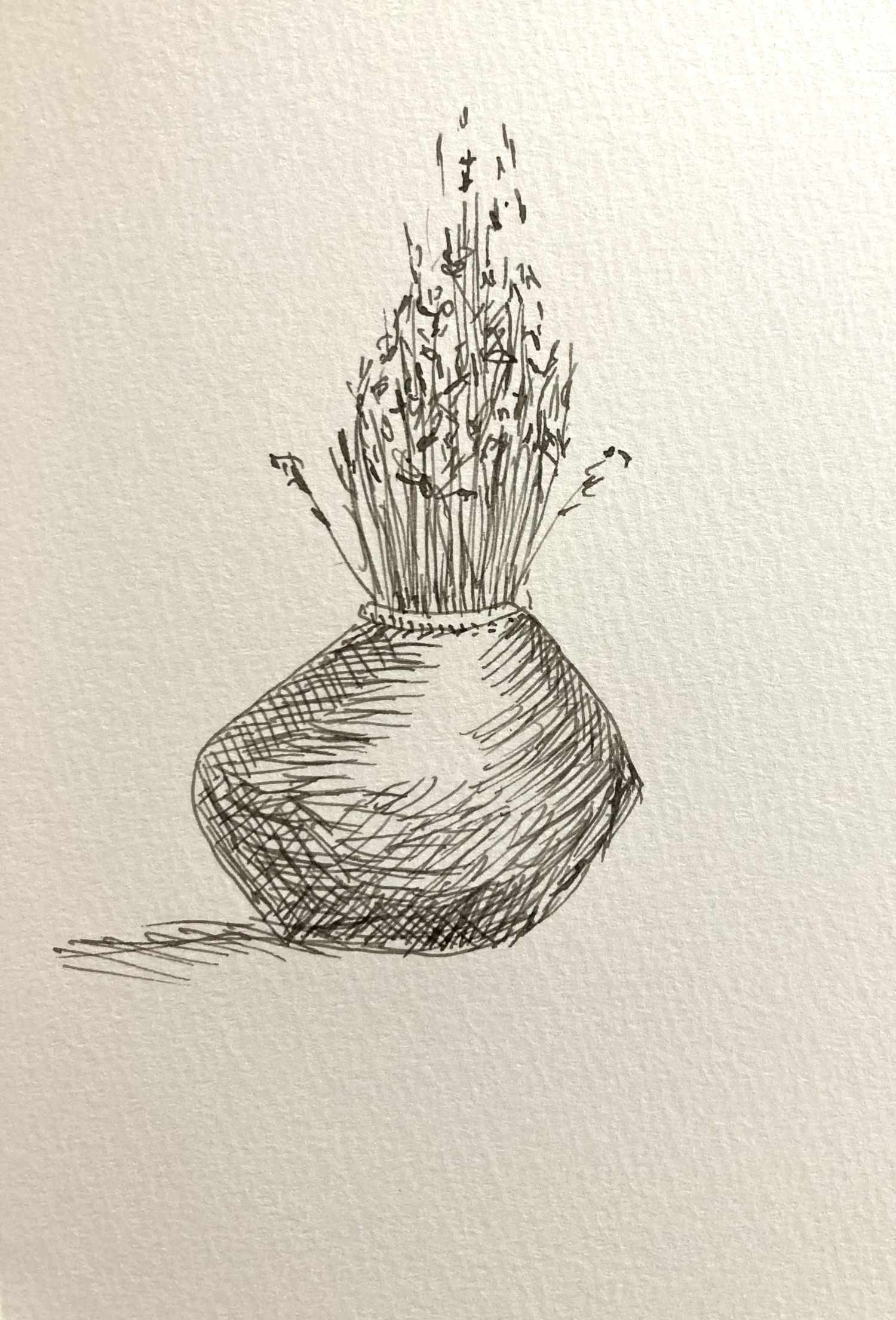 I’m visiting Maine with minimal art supplies… and that’s great.
15 September 25
River Lighthouse
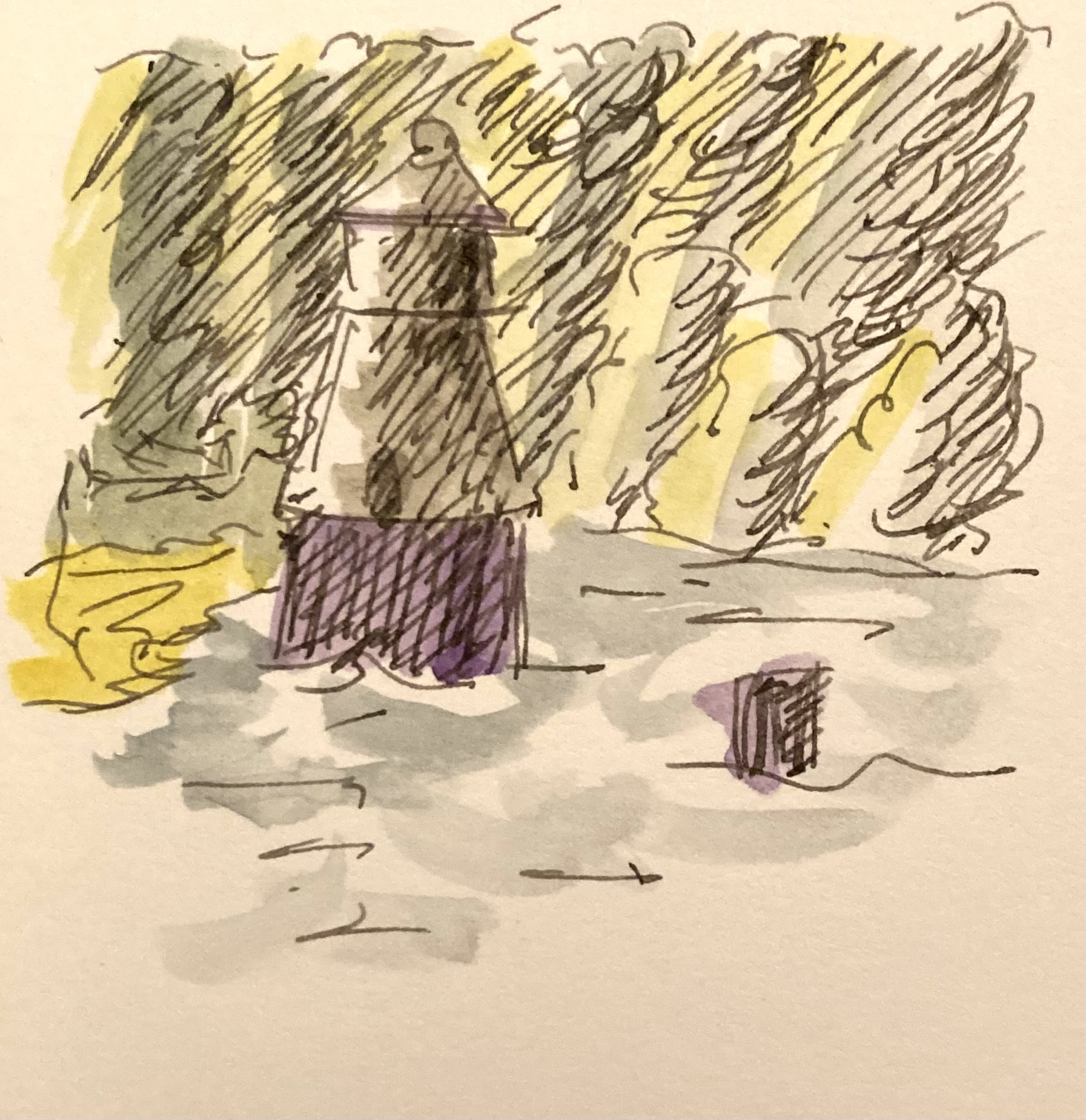 A lot of the people I send postcards to request postcards of lighthouses, and it’s easy to see why: essential features of 19th century coastal navigation, they are now quaint relics in an era of GPS and accurate weather forecasting. But today we chanced upon a singularly rare lightouse: a river lighthouse near Bath, Maine, tiny compared to coastal ones but evidently helping ships across a sandbar.
14 September 25
Pendulous Oak
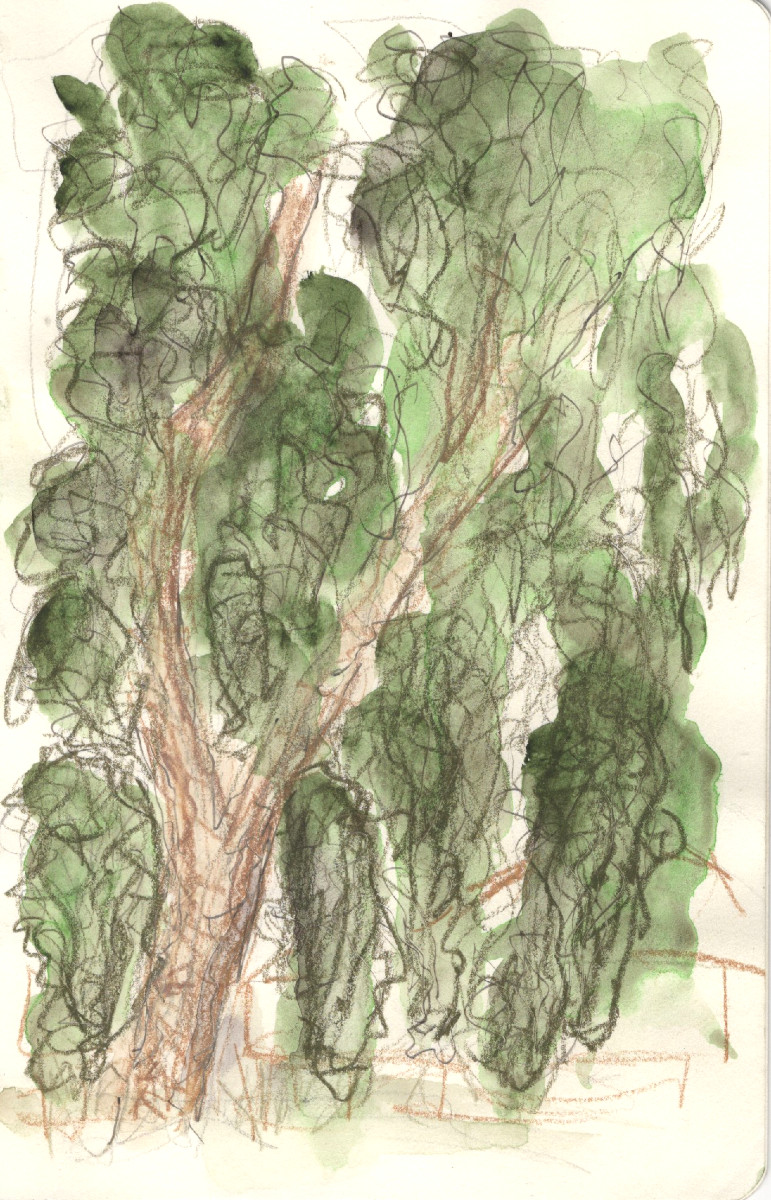 I am nearly to the end of my current daily sketchbook and will be moving on from sketching only trees on weekends. So I’ve finally sketched this handsome oak in our neighborhood — I think it is a cork oak. I’ve sketched it with Derwent drawing pencils, a fountain pen filled with De Atramentis urban gray ink, and watercolor wash, the greens being Daniel Smith green apatite genuine.